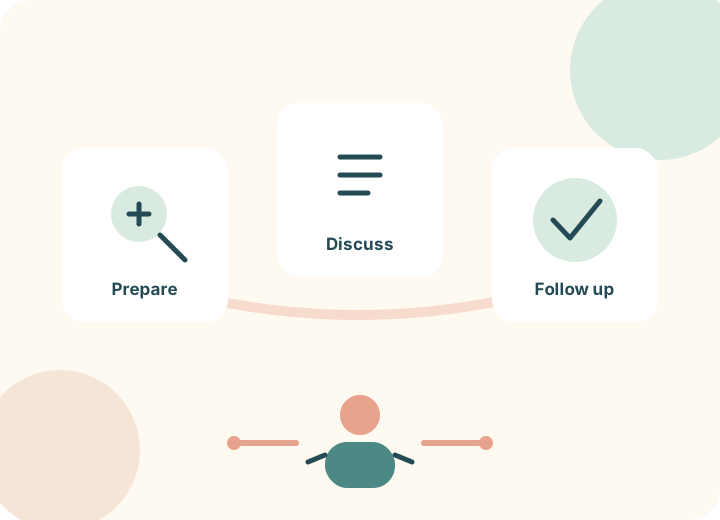
The main points in simple words
- Tell the clinician what worries you.
- Ask for explanations you can understand.
- Choose who supports you at the visit.
- Find out what happens next and whom to contact.
Explore this topic in more detail
Make room for the adult’s own agenda
Ask what the person wants to discuss before compiling a supporter’s list. They may have a concern others have missed, such as discomfort, tiredness or difficulty understanding a previous instruction. Agree which questions matter most and how they will be communicated. An aid, written note or chosen supporter may help the person take part.
Contact the service about practical adjustments: a quieter time, additional explanation, accessible information, breaks or physical access. Confirm what is available rather than assuming a request has been arranged. IDTC’s entrance is not currently wheelchair accessible; a medical appointment at another service needs its own access check.
Bring observations that distinguish usual patterns from change
When something has changed, note what is different, when it began and how it affects everyday life. Examples include a change in sleep, appetite, communication, walking, participation or ability to manage a familiar routine. Describe observations without deciding the diagnosis. A brief account from someone who knows the person can help when shared appropriately.
For an illustrative example, “usually joins breakfast but has stayed in bed on several mornings since last week” is more useful than “has become uncooperative”. Mention pain, recent illness, medication changes or a change in surroundings if known. Do not assume a new difficulty is an inevitable feature of Down syndrome, ageing or behaviour.
Organise current information without creating a data burden
Bring an up-to-date medication list, relevant reports, allergies if known, and the adult’s main questions. Include how to communicate effectively and any agreed supporter role. If information is missing, say so; do not guess names, doses or diagnoses. A pharmacy or prescribing clinician can help clarify medication information.
Keep documents private and share them with the appropriate healthcare service. A short summary can be easier to use than a large unsorted folder. Avoid sending complete records to every service without considering what is relevant and agreed. The adult should be involved in decisions about sharing as appropriately as possible.
Ask the doctor about an individual health-review plan
Adult Down syndrome medical guidance covers preventive care and assessment of relevant health concerns. Ask the doctor which follow-up, screening and vaccinations fit this person’s history and circumstances, including how hearing, vision, sleep and other concerns will be addressed. This page intentionally does not prescribe a universal test list or screening timetable.
The NHS health-check resource describes a UK service, while the GLOBAL guideline provides adult-specific clinical guidance. Neither establishes free checks or a particular service in Pakistan. Ask the actual provider about appointments, costs and referrals. A psychologist or communication therapist does not replace the medical clinician responsible for these decisions.
Leave with a clear, accessible follow-up plan
Before leaving, ask what the clinician thinks may be happening, what remains uncertain and what should happen next. If tests or referrals are recommended, clarify who arranges them, how results will be received and whom to contact if nothing happens. Ask for important instructions in a format the adult can use.
Check medication instructions with the prescriber or pharmacist rather than changing a medicine independently. If the adult did not understand the explanation, ask for it again using different words or supports. Confirm what changes should prompt earlier review and what requires urgent help. A supporter can help record the plan without excluding the adult from the discussion.
Know when planning must give way to prompt care
For immediate danger or severe acute illness, seek local emergency medical help. A routine IDTC enquiry, an observation diary or an upcoming therapy visit should not delay urgent assessment. Significant new changes or loss of familiar abilities also warrant timely clinical attention; do not wait to complete a lengthy record before contacting a healthcare professional.
After a non-urgent appointment, review whether the adult’s concern was addressed and whether the next step is manageable. If a referral is unavailable, ask the referring clinician about alternatives. IDTC can discuss appropriate adult therapy support within its scope, but these guides do not advertise medical screening, prescribing or a dedicated Down syndrome medical service.
Appointment preparation and follow-up checklist
Use these prompts in a private note or print this page. This website does not collect your answers. Examples are illustrative; adapt them with the adult.
| Before the visit | Before leaving |
|---|---|
| The adult’s main question | What was explained, and what remains uncertain? |
| A short description of changes | What needs follow-up and how soon? |
| Current medicines and relevant reports | Who arranges tests or referrals? |
| Communication and access needs | How will results and instructions be communicated? |
| Chosen supporter and sharing preferences | Whom should we contact if the plan is unclear? |