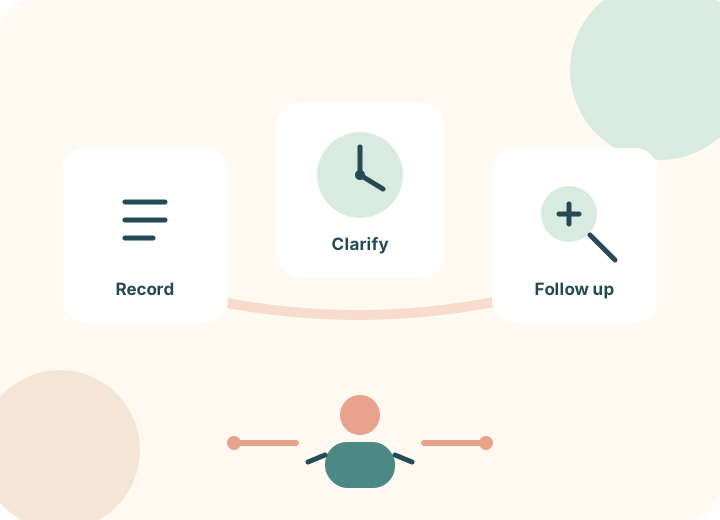
The main points in simple words
- Ask what happens next.
- Find out who will explain the results.
- Keep the plan where you can use it.
- Ask for help if the next step is unclear.
Leave with actions, responsibilities and a contact
Before leaving the appointment, ask which actions are recommended, who will arrange each one and how to contact the service if something does not happen. Distinguish a referral that the clinician will send from an appointment the adult must arrange. A vague instruction to “see someone” can leave everyone waiting for someone else.
Ask for the plan in an accessible format. The adult may prefer a brief written note, an explanation using familiar words or help from a chosen supporter. Check the meaning of unfamiliar terms and confirm what the person wants shared. A supporter can help organise information while the adult remains involved in the next step.
Agree how results will be received and explained
Ask whether results will arrive by a call, a visit, an authorised online account or another method, and whom to contact if they have not arrived within the timeframe the provider gives. Do not assume that silence means a normal result. Different services may have different processes, so record the actual arrangement.
A result displayed in an app or report can require clinical interpretation. Ask the responsible clinician to explain what it means alongside symptoms, history and other findings. A highlighted number or an automated label should not become a diagnosis made by a family member. NHS guidance describes UK result-access routes; availability and procedures must be checked with the local provider.
Worked example: a referral with no appointment yet
Imagine that a doctor recommends a hearing assessment. The adult and supporter record that the clinic will send the referral and explain how the appointment will be arranged. They ask when to contact the clinic if no information arrives. The agreed time passes without a message, so the supporter helps the adult make an enquiry through the clinic’s official contact.
The enquiry states the referral date and asks whether it was sent, whether any further action is needed and who can clarify the next step. It does not demand a particular diagnosis or assume the referral was rejected. If the adult’s condition changes while waiting, the original clinician should be contacted sooner as appropriate rather than relying on the administrative timeline.
Keep one current record without collecting unnecessary details
A compact record can include the appointment date, main question, action, responsible service, expected contact and status. Mark an action complete only when it has actually happened or the clinician has changed the plan. If a recommendation is unclear, record it as a question rather than converting it into an instruction from memory.
Keep the record privately and share relevant parts with appropriate people. Where several supporters are involved, agree who updates it and how changes are communicated. Avoid copying complete records into large family chats or sending identifiable reports to public websites for interpretation. The planning table on this page does not collect information and should not be filled by posting personal details publicly.
Clarify medicines and conflicting instructions with professionals
If medicines are started, stopped or changed, ask the prescriber or pharmacist to explain the current instructions and how they relate to existing medicines. Do not use this checklist to decide a dose, stop a treatment or resolve a conflict between prescriptions. Bring uncertainty to the appropriate professional promptly.
When advice from two services appears different, record the actual instructions and ask who will coordinate clarification. Avoid silently choosing the version that seems easier. Explain any practical barrier, such as difficulty reading a label or attending a follow-up, so the responsible professional can discuss a suitable arrangement.
Distinguish delayed paperwork from a new health concern
An overdue letter is an administrative question; new or worsening symptoms may require medical advice independently of that letter. Ask the clinician what changes should prompt earlier contact and what needs urgent care. For immediate danger or severe acute illness, seek local emergency medical help rather than waiting for a routine reply.
At the next review, ask whether the adult understands what has been resolved and what remains open. IDTC can help discuss relevant communication or therapy-support needs, but this page does not offer test interpretation, prescription advice or a medical-results monitoring service. The purpose is to make the agreed care plan easier to follow.
Private follow-up tracker outline
Use these prompts in a private note or print this page. This website does not collect your answers. Examples are illustrative; adapt them with the adult.
| Field | Record from the provider |
|---|---|
| Action | What is recommended, and what remains a question? |
| Responsible person or service | Who arranges the referral, test, explanation or review? |
| Expected next contact | The timeframe and method given by the provider. |
| If nothing happens | The official contact and agreed point to enquire. |
| Status | Pending, completed, clarified or changed by the clinician. |