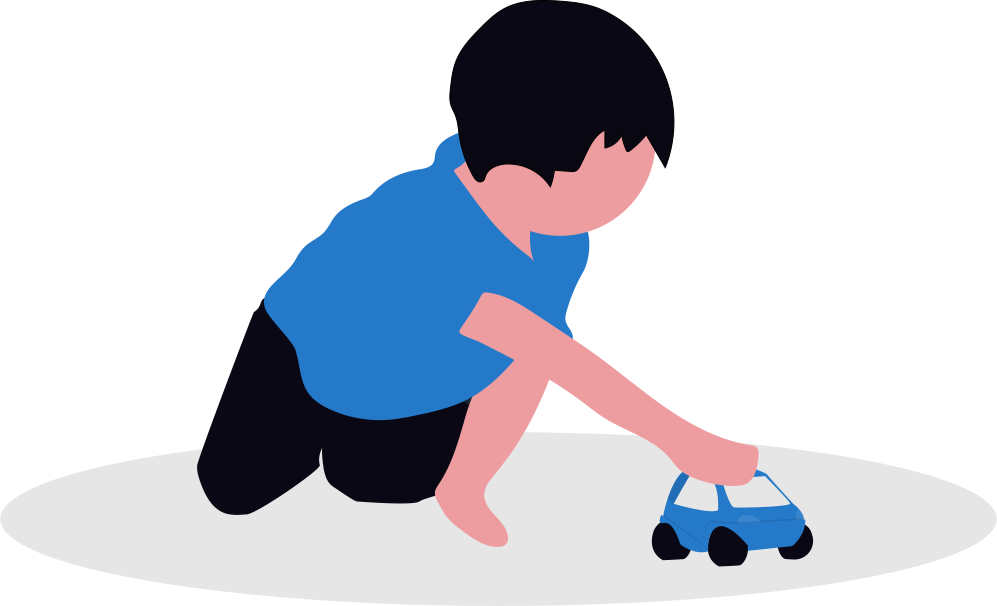
Ready, set… go!
You’ll need: A ball, car or anything that moves
Build suspense with “ready, set…” and pause. Wait for your child to say (or attempt) “go!” before you roll or release it.
Builds: Anticipation, turn-taking and a first powerful word.
Play is how children learn. Here are 20 simple games you can start today — no special equipment, just everyday things around the house — to gently build your child’s skills through fun.
These are gentle, everyday play ideas to support your child — wonderful for every family, and no substitute for assessment or therapy if you’re worried. Follow your child’s lead, keep it light, and stop while it’s still fun.
Simple ways to draw out first words, new vocabulary and longer sentences — through fun, not pressure.
More home speech activitiesYou’ll need: A ball, car or anything that moves
Build suspense with “ready, set…” and pause. Wait for your child to say (or attempt) “go!” before you roll or release it.
Builds: Anticipation, turn-taking and a first powerful word.
You’ll need: A scarf, cloth or your hands
Hide a toy under a cloth and say “where’s teddy? … there he is!”. Let your child reveal it and react with delight.
Builds: Object permanence, joint attention and early words.
You’ll need: Two snacks or two toys
Hold up both and ask “apple or banana?”. Give your child time — even a look or point counts, then say the word back.
Builds: Expressive language and back-and-forth communication.
You’ll need: Any familiar routine
Put a shoe on your hand, or “forget” to open the yoghurt. Your child will want to protest or fix it — a great reason to communicate!
Builds: Motivation to talk, problem-solving and requesting.
Playful ways to grow the words your child understands and their ability to follow what you say.
Receptive vs expressive languageYou’ll need: Just you
Give one-step then two-step instructions — “touch your nose”, then “touch your nose and jump”. Keep it silly and fun.
Builds: Listening, following instructions and body awareness.
You’ll need: A few favourite toys
Hide toys and give clues — “find the one under the chair”. Increase the clue length as they get better.
Builds: Understanding directions, positions and vocabulary.
You’ll need: Everyday household sounds
Close your eyes and guess sounds together — a tap running, keys jingling, a spoon on a cup.
Builds: Listening attention and linking sounds to meaning.
Fun ways to strengthen the big whole-body movements and small hand movements children need every day.
Gross vs fine motor skillsYou’ll need: A box and bottle lids or coins
Cut a slot in a box and let your child post lids through it. Make the slot smaller as they improve.
Builds: Fine motor control, grip and hand-eye coordination.
You’ll need: Open floor space
Crawl like a bear, hop like a frog, waddle like a penguin across the room together.
Builds: Core strength, balance and gross motor planning.
You’ll need: Old paper and glue
Tear paper into pieces and stick them to make a picture. Messy and brilliant for little hands.
Builds: Finger strength, pincer grip and creativity.
You’ll need: Dry pasta and a shoelace
Thread pasta tubes onto a lace to make a necklace. A calm, focused fine-motor workout.
Builds: Two-handed coordination and concentration.
Play that grows sharing, waiting, joining in and reading other people — the roots of friendship.
Building social skills at homeYou’ll need: A ball, sitting on the floor
Sit facing each other and roll the ball back and forth, saying “my turn… your turn” each time.
Builds: Turn-taking, joint attention and shared enjoyment.
You’ll need: A mirror or just your faces
Take turns making happy, sad, surprised and cross faces, and naming the feeling.
Builds: Emotional understanding and reading expressions.
You’ll need: Any snakes-and-ladders style game
Play together with lots of “your turn!”, waiting and cheering — winning is not the point.
Builds: Waiting, following rules and coping with losing.
Short, motivating games that gently stretch how long your child can focus — a little at a time.
Activities to build attention & focusYou’ll need: A phone timer
Set a short, achievable time and finish a small task together before it beeps. Celebrate, then stretch the time.
Builds: Sustained attention and task completion.
You’ll need: Pairs of cards or socks
Turn cards face down and take turns finding matching pairs from memory.
Builds: Focus, working memory and turn-taking.
You’ll need: Music
Dance while the music plays and freeze when it stops. Great for children who need to move to focus.
Builds: Listening, impulse control and self-regulation.
Soothing, sensory play for children who get easily overwhelmed — to help their bodies feel calm and regulated.
Sensory processing difficultyYou’ll need: A bottle, water and glitter or beads
Shake it and watch the pieces slowly settle together, breathing slowly as they fall.
Builds: Self-regulation and a calming focus point.
You’ll need: Household chores
Let your child carry the laundry basket, push a box or “help” move cushions. Deep-pressure work is naturally calming.
Builds: Sensory regulation and body awareness.
You’ll need: A blanket
Gently roll your child up snugly in a blanket (face always out) for cosy, calming deep pressure.
Builds: Calming proprioceptive input and comfort.
Looking for the right toys to help your child? Not sure which skills to focus on? Try our 3-question guide, or read about the importance of play in development.
In therapy, we tailor play to exactly what your child needs next. Message us and we’ll show you how — and give you ideas to try at home.
MPS Road, Block A Model Town, Multan (near Bloomfield Hall School, Street No. 2) · Mon–Sat, 10 AM – 7 PM