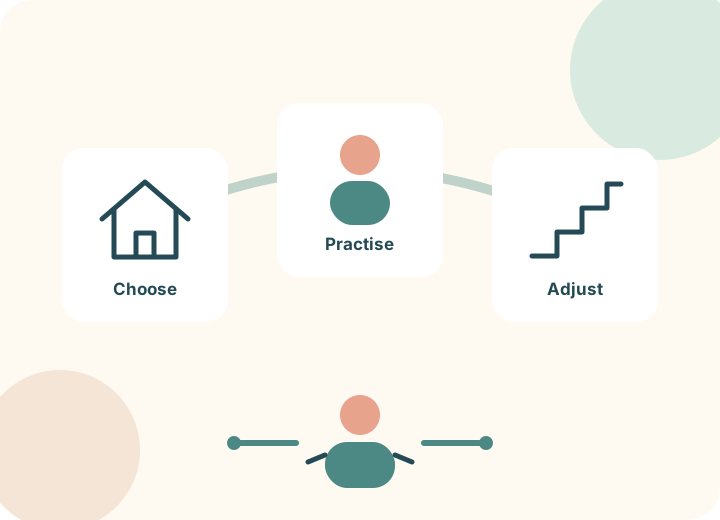
The main points in simple words
- Pick a task that matters to you.
- You can do one part and ask for help with another.
- Agree what help feels comfortable.
- A change in the task may mean changing the plan.
Explore this topic in more detail
Choose a routine with a clear purpose
Ask which activity would make the day easier or more satisfying: putting away personal items, preparing clothes, using a shopping list or getting ready to leave. Define the situation instead of writing a broad target such as “be independent”. For example, “find my keys before leaving for the activity group” tells everyone where to start and why the task matters.
Check whether the adult wants to practise and what assistance they already use. A family’s desire for a tidier room may differ from the adult’s priorities. Look for a mutually acceptable goal and a private place for personal belongings. Successful support should create more useful choice, not simply make the person easier for others to manage.
Find the difficult step before adding instructions
Observe a familiar routine with permission. Is the difficulty finding an item, remembering the sequence, opening packaging, understanding a label or managing noise? Record what happens without guessing the cause. If clothes are hard to locate because drawers move each week, a consistent arrangement may matter more than another verbal reminder.
Try one manageable adjustment, such as a reachable storage place, a short written list or a photograph chosen with the adult. Pictures are not automatically useful: ask the person to show what the image means in that situation. Where movement, vision or other access needs affect the task, discuss appropriate professional assessment rather than designing a generic exercise programme.
Worked example: buying two familiar items
Imagine an adult who wants to buy a notebook and pen. Before leaving, agree the destination, payment arrangement and role of the supporter. The adult may prefer to show a photograph, use a short list or name the items. Check the likely price and what to do if something is unavailable; do not turn the visit into a surprise test.
During the visit, the supporter can wait while the adult communicates and step in when asked or when necessary for an agreed safety concern. Afterwards, ask which part felt easy, rushed or confusing. Record an observation such as “asked the assistant for the pen using the photo” rather than a judgment such as “was good”. Decide together whether to repeat, change or stop the activity.
Match assistance to the task and the person
Agree how help will be offered. Some people prefer a verbal reminder, others a demonstration or a written cue. Avoid several people giving instructions at once. Physical assistance with personal tasks should be explained and appropriate to consent, comfort and assessed needs; a routine should not become forced practice.
When a task becomes easier, ask whether less help would be welcome and practical. Support does not have to disappear to count as progress. Being able to request assistance, direct someone or use an aid consistently can be an important outcome. Do not remove a useful aid merely because another person thinks the task ought to be done from memory.
Keep privacy and safety specific
Personal-care routines deserve privacy and age-respectful language. Ask who the adult wants involved and what information may be shared. For cooking, road travel, medicines, swallowing difficulties or financial transactions, discuss the actual risks and appropriate professional advice. This page is not a clearance for unsupervised activity or a medication-management plan.
If a familiar routine suddenly becomes much harder, note when the change began and whether pain, tiredness, distress or environmental changes are present. Seek appropriate assessment rather than assuming laziness or refusal. Immediate danger or serious illness needs prompt local emergency help; a training session should not delay it.
Review usefulness, not just completion
After an agreed trial, review the adult’s experience, the amount and type of help, and whether the activity fits real life. A task performed once in a quiet session may still need support at home or in a busy shop. Describe those differences instead of reporting a skill as universally mastered.
If progress stalls, reduce unnecessary complexity and revisit whether the goal still matters. Ask IDTC whether its adult daily-living support matches the specific need and whether another professional should contribute. Confirm what can be practised safely at home, who will explain adjustments and how progress will be reviewed.
Routine review sheet
Use these prompts in a private note or print this page. This website does not collect your answers. Examples are illustrative; adapt them with the adult.
| Record | Example |
|---|---|
| Chosen routine | Find keys before leaving. |
| Barrier noticed | Keys are stored in different places. |
| Agreed change | A chosen tray beside the bag. |
| Adult’s feedback | Easier to find; wants a different tray location. |
| Next decision | Move the tray and review after several ordinary outings. |