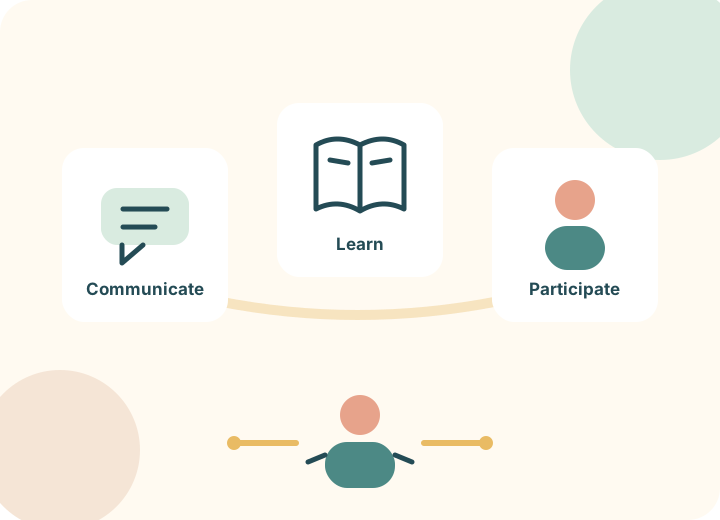
Build communication, learning and everyday independence
Start with the child’s abilities, interests and support needs. Explore practical guidance for families, teachers, carers and students, with medical care and developmental support kept connected.
What is Down syndrome?
Down syndrome is a genetic condition involving extra chromosome 21 material. Trisomy 21 is the most common form; translocation and mosaic forms also occur. It is not caused by poor parenting or a child’s actions. A healthcare professional can explain the individual diagnosis and whether genetic counselling is relevant.
The diagnosis does not determine a child’s personality, interests or every future ability. Communication, movement, learning and self-care can develop differently, and support needs vary. Avoid assuming that every child is sociable, learns best from pictures or understands everything they hear. Observe the individual and ask what helps.
Choose a starting point that matches your question
For local appointments, begin with Down syndrome support at IDTC in Multan. For a coordinated overview of assessment and goals, use the development and learning plan. The guides below focus on distinct practical questions so you can start where help is needed today.
Development, learning and participation
Down syndrome: build an individual development and learning plan
Connect assessment, communication, learning and everyday independence in a practical plan for a child with Down syndrome, with goals and review questions.
Read the guide →Practical guideEarly intervention for Down syndrome: choose the first useful goals
Plan early support around communication, play and daily routines. Learn what to ask providers and how to keep home practice useful and manageable.
Read the guide →Practical guideDown syndrome: preparing for health and developmental follow-up
Prepare questions about hearing, vision, sleep and developmental changes, and coordinate medical follow-up with your child’s learning and therapy support.
Read the guide →Practical guideLearning and memory in Down syndrome: make a task easier to access
Adapt instructions, demonstrations and practice to a child’s learning profile, and check whether a new skill works beyond the original activity.
Read the guide →Practical guideReading, writing and number skills for children with Down syndrome
Plan accessible literacy and number activities, distinguish recognition from understanding, and adapt writing without limiting a child’s learning opportunities.
Read the guide →Practical guideDown syndrome at school: goals, access and an individual education plan
Prepare a useful school plan with individual goals, accessible communication, classroom adjustments, responsibilities and review measures for your child.
Read the guide →Practical guideDown syndrome and daily living: build useful independence step by step
Break dressing, hygiene and everyday routines into manageable steps, choose useful prompts and review independence while preserving privacy and safety.
Read the guide →Practical guideMovement and fine-motor skills in Down syndrome: plan for participation
Understand questions about movement, hand skills, fatigue and activity access, and coordinate appropriate professional advice without using a generic exercise plan.
Read the guide →Communication belongs in every part of the day
Communication includes understanding and expressing needs, choices, ideas and discomfort. Spoken words, gestures, pictures and AAC may be used together according to the person’s needs. An accessible communication system should remain available across home, school and therapy, rather than being treated as something the child must earn.
Our existing Down syndrome communication guide covers speech and language questions. The AAC guide explains further options. Ask a qualified communication professional which supports fit the child, including hearing, vision and physical access. Feeding and swallowing difficulties require appropriate specialist assessment.
Keep health questions visible
Hearing, vision, sleep, comfort and other health needs can affect participation. The child’s doctor should lead medical follow-up and advise on relevant checks. Do not assume a new difficulty is simply part of Down syndrome or respond only by increasing learning demands. Use the health and development review guide to organise observations and questions.
Build a manageable plan around real routines
For example, putting a school bag away can involve recognising its place, moving it, following a short sequence and asking for help. Record which part the child already manages and what assistance makes the next step possible. Choose one useful change and review it with the relevant professional instead of adding unrelated drills.
Notice enjoyment, communication, effort and comfort as well as completed tasks. A skill demonstrated in one room may need support elsewhere. The learning and memory guide explains how to explore those differences, while the daily living guide focuses on practical independence and dignity.
Services, collaboration and realistic expectations
IDTC can discuss developmental assessment, speech and language support, special education, school readiness, functional life skills, behavioural support and parent coaching according to assessed needs and professional scope. Confirm the clinician, appointment format, fee and any report or school-coordination arrangements. Specialist medical, physiotherapy or swallowing services should not be assumed to be included.
A personalised plan identifies a useful next step; it does not guarantee a milestone date, school placement or a cure. For a child or teenager, enquire about an appointment. For adults, use the separate adult Down syndrome guidance on daily life, communication, work and choices, and discuss individual needs with an appropriate provider.
Related services and existing resources
- Down syndrome support and services in Multan
- Speech, language and communication in Down syndrome
- Understanding Down syndrome support in Pakistan
- Everyday home activities to discuss with your child’s team
- AAC: pictures, signs and communication devices
- Understanding an individual education plan
- Speech and language therapy
- Individualised special education
- Functional life skills support
- Occupational therapy enquiries
- Early intervention enquiries
- Parent coaching
- Developmental assessment enquiries
- School readiness support
- Information for schools
- Understanding child behaviour
- When a child’s behaviour changes suddenly
Frequently asked questions
Can children with Down syndrome learn to read and write?
Many develop literacy skills, with varied pace and levels. Teaching should match the individual learner and provide accessible ways to understand and express ideas.
Will my child become independent?
Support needs vary. Useful goals build choices, participation and practical skills from the person’s own starting point without promising a future level of independence.
Can speech and language therapy help?
It may support understanding, expression, speech clarity and functional communication according to individual assessment. AAC can be part of communication support; feeding or swallowing concerns need suitable specialist assessment.
How should we plan for school?
Discuss strengths, needs, access and meaningful participation with the school and relevant professionals. Explore inclusion and adjustments, and confirm what the particular school can provide.
Does therapy cure Down syndrome?
No. Developmental support teaches skills and improves access to everyday activities. Medical professionals assess and treat associated health conditions; neither role removes the chromosomal condition.
Sources and editorial information
Prepared by IDTC, 29 October 2026, using the supplied Down Syndrome topic outline and the sources below. Clinical review has not yet been recorded. Examples are illustrative, not patient cases. Overseas service and education arrangements do not automatically apply in Pakistan.