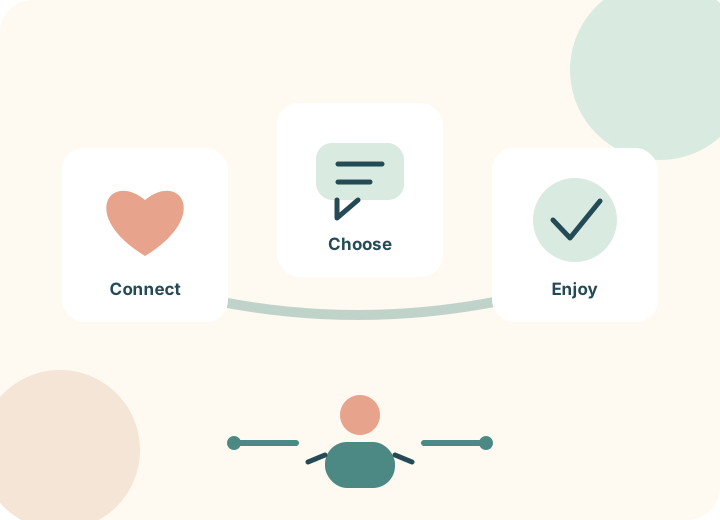
The main points in simple words
- Choose people and activities you enjoy.
- A friendship should feel respectful.
- You can say no to a visit, message or touch.
- Ask a trusted person for help if something feels wrong.
Explore this topic in more detail
Begin with existing connections and interests
Ask who the adult likes spending time with and what they enjoy doing together. Relationships may include relatives, neighbours, classmates, colleagues and people met through shared activities. Do not assume that every adult wants a large social group or that a busy calendar means the person feels connected.
Map one existing connection that the adult wants to maintain and one opportunity they want to explore. A familiar shared activity can provide a reason to meet without making conversation a test. Confirm that the activity is accessible and welcoming; attendance alone is not the same as belonging or friendship.
Remove practical barriers to meeting
Consider transport, cost, noise, timing, communication and access to a phone or message format. A missed meeting may reflect an unclear plan rather than lack of interest. Agree the location, who is going, how long the visit might last and how the adult can ask to leave or take a break.
If support is needed, decide with the adult how close the supporter should be and what help they should offer. A supporter might help arrange transport, then allow space for conversation. Avoid making attendance dependent on behaving in a particular socially typical way, such as maintaining eye contact throughout.
Worked example: keeping a school friendship after leaving
Imagine two former classmates who both enjoy drawing and want to meet again. With their agreement, a supporter helps them exchange a message about meeting at a familiar place. Each person chooses whether to attend and what to bring. The plan includes transport and a simple way to change the date.
Afterwards, ask each person whether they enjoyed the meeting and want another. Do not decide that a friendship failed because conversation was brief. Equally, do not keep arranging meetings if one person repeatedly says they do not want them. The role of support is to make a chosen connection possible, not to manufacture agreement.
Discuss boundaries in concrete adult language
Use everyday situations to discuss asking before sharing a photograph, borrowing an item, touching someone or visiting their home. Explain that preferences can change and that both people can say no. Romantic relationships and sexual-health questions deserve age-appropriate, accessible education from an appropriately qualified professional; this page is not a consent assessment.
For messaging, agree practical ways to recognise an unwanted request and find help. Discuss requests for money, passwords, private photographs or secrecy without blaming the person who receives them. A trusted supporter should listen respectfully, help preserve relevant information when appropriate and seek local professional assistance for threats, exploitation or abuse. Immediate danger needs urgent help.
Respond to loneliness without blaming the person
If the adult says they feel lonely, ask what kind of connection they miss. The answer may be one particular friend, a valued role or more control over plans. Offer options rather than prescribing a group that does not match their interests. Short, comfortable opportunities may be more useful than a demanding social timetable.
If withdrawal is new, persistent or accompanied by other changes, consider health, mood, loss, bullying and access barriers. A qualified professional can help assess concerns. Avoid labelling all withdrawal as poor social skills or assuming the adult needs more exposure to an upsetting situation.
Measure whether participation feels worthwhile
A useful review asks whether the person chose to attend, could communicate, felt respected and wants to go again. A count of outings misses those details. Record any adjustment that helped, such as a quieter meeting time or a clear message about transport, so it can be offered again.
IDTC can discuss relevant adult communication or emotional-support concerns. These guides do not claim that IDTC runs a friendship club, social event or dating service. Check local activities directly for current arrangements, accessibility and costs, and keep the adult involved in deciding what to try.
A plan for a chosen social activity
Use these prompts in a private note or print this page. This website does not collect your answers. Examples are illustrative; adapt them with the adult.
| Prompt | Plan together |
|---|---|
| What I want to do | Name the shared interest or person I want to see. |
| What I need to know | Place, cost, time and who is coming. |
| Help I choose | Transport, communication or a nearby supporter. |
| My exit plan | How I can ask for a break or leave. |
| Afterwards | Did I enjoy it, and do I want to repeat it? |