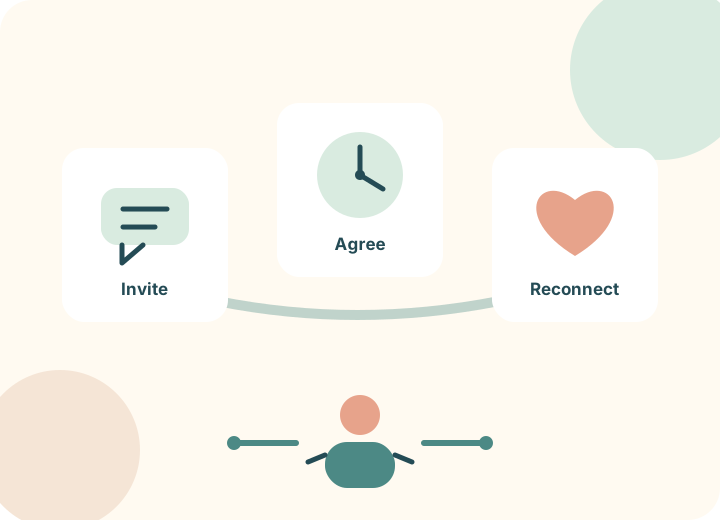
The main points in simple words
- Choose whom you want to contact.
- Ask whether they would like to meet or talk.
- People can be busy or say no.
- A supporter can help without speaking for you.
Find the practical barrier to contact
Ask what the adult misses about the friendship and what makes contact difficult. The problem might be an inaccessible phone, not knowing when someone is free, transport or losing contact after school. These barriers need different solutions. Do not assume the person lacks interest or social understanding because a meeting has not happened.
Check that both people want contact and what kind suits them. A short call, a shared activity, a voice message or a face-to-face visit may be preferable to frequent text conversations. Agree whether a supporter is needed to arrange the practical details, and keep that role separate from choosing the friend.
Create a message the adult can recognise as their own
A useful invitation says who is making contact, what they would like to do and one clear question. For example: “It is Ali. Would you like to draw together on Saturday afternoon?” The names and activity are illustrative. Use a format the adult understands and can review before it is sent.
A supporter can help write or read a message, but should not silently add promises, private information or feelings the adult has not expressed. If the person uses AAC, allow their chosen messages and enough time. Avoid requiring a perfectly worded invitation before helping them contact someone. The purpose is a genuine exchange, not a scripted performance.
Worked example: changing a meeting time
Imagine a friend replying that Saturday is not possible but Sunday might work. The adult chooses whether to offer Sunday, suggest another activity or leave the invitation for later. A supporter helps compare the date with existing plans and explains any transport limit. The friend’s response is not treated as an obligation to meet.
Once both agree, record the place, time, expected duration and transport arrangements in a format each can use. If a plan changes, decide who will send the update. Afterwards, ask whether the adult wants another meeting rather than automatically creating a standing appointment that neither person requested.
Agree how to handle waiting and unanswered messages
Discuss what the adult would like to do while waiting for a reply. People may be busy, have phone problems or not want contact; an unanswered message does not tell us which explanation is correct. A chosen supporter can help think through possibilities without claiming to know what the friend feels.
Agree a reasonable follow-up approach that respects the other person’s boundaries. Avoid repeated messages, contacting many relatives to obtain an answer or interpreting a delay as permission to visit unannounced. If the adult is distressed, listen to their experience and help them choose another activity or source of support. Do not dismiss the feelings simply because a friendship seems minor to someone else.
Keep supporter involvement visible and limited
Ask what help the adult wants with reading, typing, transport or reminders. If a supporter sends an arrangement message, make their role clear rather than impersonating the adult. Discuss what information may be shared and whether the adult wants privacy during the conversation or visit.
Online contact also needs a practical help plan. Explain how to pause and speak with a trusted person about requests for money, passwords, private images or secrecy. Do not shame the adult if something concerning happens. Threats, exploitation or immediate danger require appropriate local help; the friendship plan is not a safeguarding investigation.
Review the quality of contact, not a target number
Ask whether the interaction felt welcome, whether the adult could express themselves and whether they want to repeat it. Several unwanted calls are not better than one enjoyable conversation. Notice practical changes that helped, such as a quieter setting, a reminder chosen by the adult or a shorter visit.
If the adult loses interest, respect their preference while checking whether a new barrier has appeared. Persistent loneliness or a marked change in participation may warrant professional support. IDTC can discuss relevant communication or emotional-support concerns, but this guide does not advertise a friendship-matching or social-club service.
A keep-in-touch plan
Use these prompts in a private note or print this page. This website does not collect your answers. Examples are illustrative; adapt them with the adult.
| Question | Agree with the adult |
|---|---|
| Who do I want to contact? | A person who welcomes contact, without publishing their details. |
| How do I want to communicate? | Call, message, AAC, a visit or another accessible method. |
| What is the invitation? | One clear activity or question in the adult’s own meaning. |
| What if plans change? | Who updates whom, and how to check the new arrangement. |
| How much help do I want? | The supporter’s agreed role and privacy limits. |