The main points in simple words
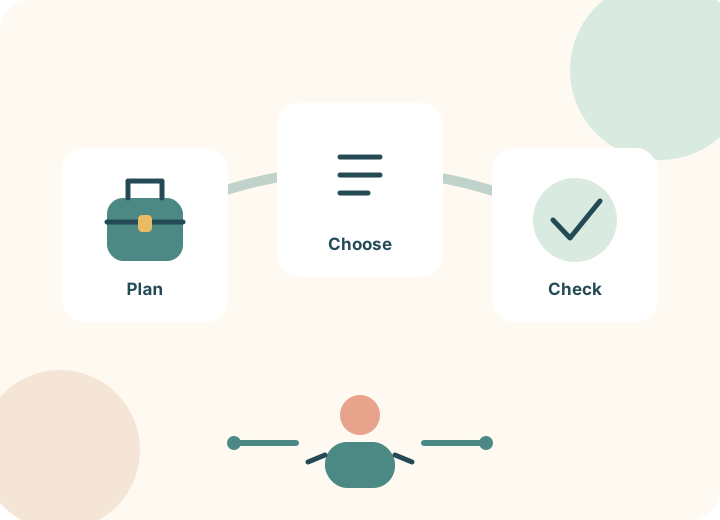
- Choose what you want to buy.
- Use a list you understand.
- Agree who helps with payment.
- You can pause or leave if the trip becomes difficult.
Separate the shopping goal from the travel goal
An adult may want to choose personal items while still needing help getting to the shop. Keep those goals separate. Being able to find an item does not show that the person can travel independently, manage every payment method or cope with an unfamiliar location. Agree which part of the trip the adult wants to do and what support remains in place.
Choose a familiar destination and a manageable purpose for the first practice visit. Check opening times, access and likely crowding. Ask whether the person prefers to go with someone, visit at a quieter time or use a different shop. A practical adjustment should make the chosen activity easier to access, rather than turn the trip into an assessment the adult did not agree to.
Make the list usable in the actual shop
A list could contain words, photographs, packaging examples or another format the adult understands. Try it before leaving: can the person identify the intended item and distinguish it from a similar product? A picture of one brand may be confusing if only another brand is available. Decide which details matter, such as size, quantity or a personal preference.
Keep the first list focused and leave space to indicate that an item has been found. A phone list may suit one person, while another prefers paper. If the screen is hard to use while carrying a basket, change the format rather than assuming the person has forgotten the task. The list should remain available throughout the visit.
Worked example: an unavailable item
Imagine an adult who wants a blue notebook and a black pen. Before leaving, the adult decides that another notebook colour is acceptable but a different pen is not. In the shop the blue notebook is unavailable. The supporter points back to the agreed alternative and gives time for a choice, rather than selecting something without discussion.
The adult chooses a green notebook and asks the assistant about the pen using a photograph. If the pen is unavailable, the agreed plan is to buy only the notebook. This example practises a useful change of plan. It does not require the person to accept any substitute or complete the purchase when they would prefer to stop.
Agree payment help and keep it transparent
Before entering the queue, agree the spending limit for this purchase, how payment will be handled and what help the adult wants. A supporter might help read the price, check the total or organise a receipt. Explain what is happening if the total differs from the expected amount. Do not treat handing over money as consent to unrelated purchases.
Use only payment arrangements that the person and any appropriately authorised supporter can use safely. This guide does not advise sharing bank passwords, handing over PINs or granting financial authority. Questions about account access or authority belong with the relevant bank and qualified local advisers. Keep any money handled on the person’s behalf clearly accounted for.
Prepare a way to ask for help or end the visit
Agree a short message or signal for “please help”, “I need a break” and “I want to leave”. The adult may use speech, a card, a gesture or a communication aid. Make sure the supporter knows the signal and responds. Avoid insisting on finishing a task after the person has become overwhelmed merely to maintain the practice schedule.
If a problem occurs, first address the immediate concern. Afterwards, discuss what would make another visit more manageable: a shorter list, another time, clearer directions or a different helper. Any health or access concern should receive appropriate advice. Do not infer a general inability to shop from one difficult visit.
Review the decision process as well as the purchase
Ask which part felt comfortable, what the adult wants to repeat and what they would change. Record a specific observation such as “used the list to ask about the missing pen”. Note the help provided, so the outcome is not described as independent if someone supplied every step.
Keep practice connected to real preferences. Repeating a trip the person dislikes may build frustration instead of a useful routine. If the goal remains important but the barriers are unclear, ask an appropriate professional about communication, daily-living or access support. IDTC can discuss relevant adult support within its confirmed scope; this is not a financial-management service.
Shopping trip plan and review
Use these prompts in a private note or print this page. This website does not collect your answers. Examples are illustrative; adapt them with the adult.
| Before the trip | After the trip |
|---|---|
| Items and quantities chosen by the adult | What was bought, and was the choice respected? |
| List format and acceptable alternatives | Did the list work when an item was missing? |
| Agreed payment help and spending limit | Was the payment clear and accounted for? |
| Break or help signal | Was it recognised and acted on? |
| One part the adult wants to practise | What help made that part possible? |