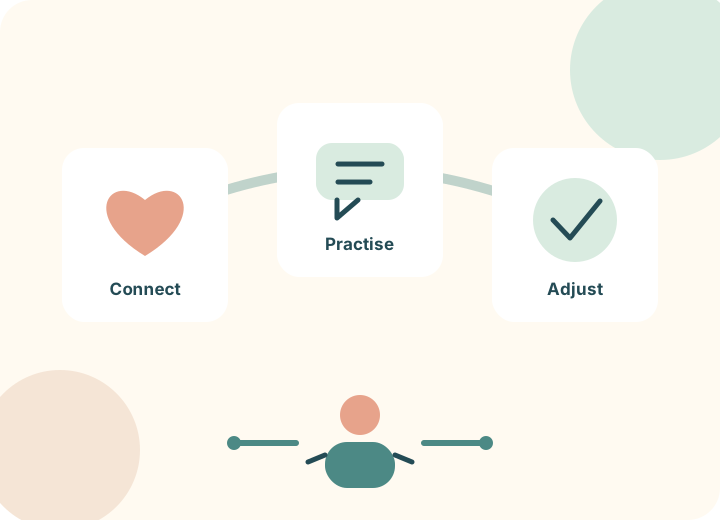
Start with support, not a race against a milestone
Early intervention means organising appropriate support during early development. It should fit the child’s health, abilities and family life. A list of milestone ages cannot decide which activity is safe or useful for a particular child, and comparison with another child’s progress is not a treatment plan.
Ask the healthcare team about current medical needs and the developmental professionals who may be relevant. It is reasonable to begin a conversation about support while other appointments are being arranged. The family also needs ordinary time to enjoy the child, rest and manage daily care.
Choose one routine with a clear purpose
Pick a familiar activity such as playing with a favourite toy, looking at a book or getting ready to leave home. Ask what the child already does in that routine and which small next action would help them take part. Make the purpose meaningful to the child, rather than selecting an exercise because it looks impressive.
Illustrative example: during play, the child reaches for a familiar toy. The adult responds to that attempt and models a useful word or accessible gesture. The aim is a shared message, not repeated testing of whether the child can copy a sound on demand.
Ask the professional to demonstrate the support
At an appointment, ask to see how an idea would work with the child’s actual materials and communication. Explain what is practical in your home, which languages carers use and who will carry out the routine. Ask what to do if the child turns away, seems tired or does not understand.
Bring back what happened, including difficulties. If a picture was too small to see or a toy was hard to manipulate, those are useful reasons to adapt the activity. A home programme should make support more accessible, not become a test of how perfectly a parent follows instructions.
Coordinate advice instead of adding more tasks
If several professionals are involved, ask how their recommendations fit together. One routine may offer a chance to communicate, reach for an object and make a choice. Clarify which positioning or movement advice must come from the relevant professional and which communication supports should remain available.
Keep a short shared summary of priorities and important health advice. Do not assume the clinic, school and medical team automatically exchange information. Agree what can be shared, who will send it and who will answer questions when recommendations appear to conflict.
Recognise when practice needs changing
Notice whether the child can participate comfortably, shows interest and has a way to say stop or ask for help. Shorter practice or a different time may be more manageable than adding repetitions. New pain, feeding concerns or loss of an established skill needs appropriate healthcare advice, not simply more developmental exercises.
An illustrative review might find that a child enjoys sharing a book after rest but is too tired immediately after travel. Changing the timing may make the agreed activity more accessible. Keep observations specific rather than describing the whole week as successful or unsuccessful.
Questions before committing to a programme
Ask which goals are proposed, who will deliver the work, what carers will be taught and how progress will be discussed. Clarify the expected time and cost before accepting a schedule. No programme should promise to remove the chromosomal condition or guarantee when a child will walk or speak.
IDTC can discuss relevant developmental, communication, learning and parent-support services. Ask directly about any specialist service required. The existing home programme offers everyday ideas to discuss with the child’s team; it does not replace individual medical or therapy advice.