Identify the learning demand before choosing a strategy
A task can require understanding words, remembering a sequence, seeing small details, moving materials and communicating an answer. Find which part is difficult instead of deciding that the child cannot learn the whole activity. Observe what changes when an adult demonstrates or makes the materials more accessible.
For example, a child may place a coat on a hook when shown the location but struggle with a long spoken instruction while carrying a bag. The learning question is how to make that sequence understandable and manageable. It is not automatically a memory diagnosis.
Use visual support as an option to assess
Pictures, real objects, written cues or demonstrations can make information easier to revisit. Choose a format the child can recognise and use. Do not assume every child has the same visual strength or understands a symbol simply because it is on a printed card.
An illustrative routine shows the actual coat hook and bag space before using photographs of them. Ask the child to demonstrate what happens next with appropriate help. If the picture adds confusion, reconsider it rather than increasing reminders to look at it.
Make practice meaningful and specific
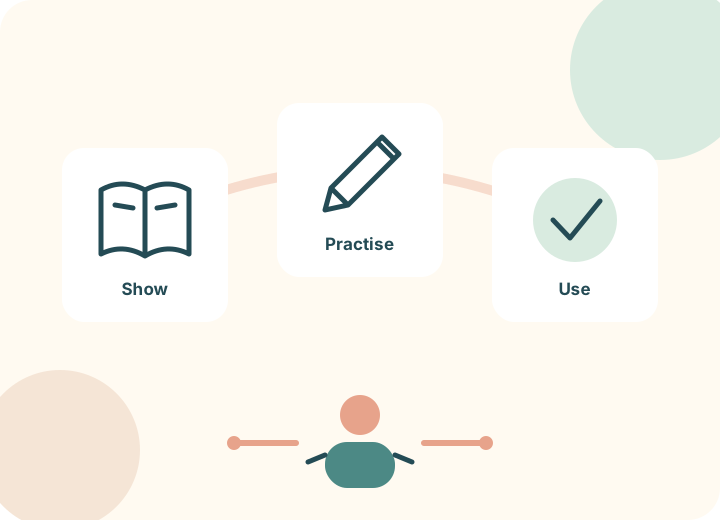
Choose a useful action within an ordinary routine. Show the step, give the child an opportunity to respond and offer the support agreed with their educator or therapist. Notice the assistance needed so that “completed” does not hide the fact that an adult did most of the work.
Repetition can be varied without changing everything at once. A child learning to put a cup in an agreed place might practise during different ordinary meals. Keep safety and comfort in view, and avoid turning every family interaction into a test.
Check whether the skill transfers
A skill shown with one person and one set of materials may need support in a different setting. Plan the next small variation deliberately: a different familiar adult, another suitable object or the corresponding routine at school. Keep enough familiar cues for the child to understand the task.
Illustrative example: a child recognises their name card at one table. Ask whether they can use it to find their belongings in another familiar place, with help if needed. This is a new learning opportunity, not evidence that the original success was meaningless.
Troubleshoot a task that keeps breaking down
Check the language, number of steps, visual access, physical demands and timing. Ask whether hearing, vision, sleep or health concerns need review. Distress or fatigue should prompt a change in support, not a conclusion that the child is unmotivated.
Keep a brief comparison: what task was offered, what help was given, what the child did and which part remained difficult. Bring actual materials to the teacher or therapist where practical. Specific examples make it easier to choose a useful adjustment than a statement that the child forgets everything.
Make the plan useful for teachers and students
For educators, record an individual starting point and a meaningful next step. A goal could describe completing one part of a familiar routine with a picture cue, rather than memorising an arbitrary list. Agree who will prepare the cue and where it will be available.
For students learning about support, distinguish an observed action from an explanation of why it happened. A fictional example is not evidence about a real child. Use appropriate supervision and consent for coursework involving personal information, and preserve the child’s dignity in how learning needs are described.