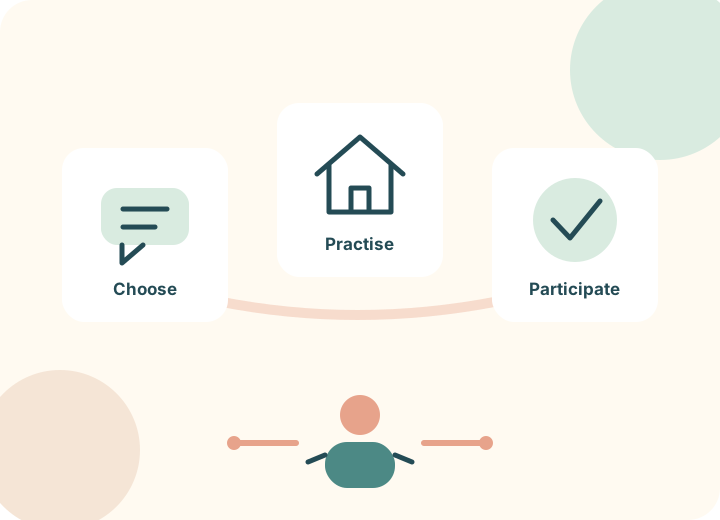
Choose independence that matters to the person
Independence can mean completing one part of a routine, making a choice or asking for the help needed. It does not have to mean doing everything without support. Ask what the child or young person wants to do and which routine would make daily life easier.
Keep materials and language age-respectful. An older learner may work on the same underlying skill as a younger child but need a different context. Choosing clothing, organising a bag and communicating a personal-care preference can all be meaningful priorities.
Break the routine into observable steps
For an illustrative dressing routine, identify finding the item, orienting it, putting it on and managing the fastening. Ask which part the child can already do and where help is needed. This gives a clearer starting point than “cannot dress”. An occupational therapist can advise on relevant functional or motor barriers.
Choose one manageable step and make the materials accessible. During hand washing, for example, the selected step might be reaching the towel after the rest of the routine has been supported. Safe access to water and appropriate supervision still need to be arranged.
Use prompts deliberately and review them
A prompt might be a demonstration, picture, brief word or other agreed assistance. Record what help was used so progress is not judged only by whether the routine ended. Give the child time to respond, and discuss how support can be reduced gradually when appropriate.
If a child waits for an adult to begin every step, ask whether the next step is understandable and the materials are in reach. Removing help suddenly is not a fair test of independence. The aim is useful participation, with assistance retained where it is needed for safety or access.
Protect privacy and communication in personal care
Explain care in an accessible way, respect preferences and teach a way to ask for help, pause or discomfort to be addressed. Agree which adults provide intimate care and how information is shared. Personal-care teaching should not involve public charts that expose private details.
Toileting readiness, pain, constipation or changes in continence should be discussed with the appropriate healthcare professional. Feeding and swallowing concerns need suitable specialist assessment. Do not change food textures, use forced feeding or withhold drinks to meet a learning target from a webpage.
Practise beyond the original setting
Illustrative example: the child puts a bag on the home hook using a photo cue. At school, the hook, bag space and instruction may differ. Discuss how to make the corresponding school step recognisable instead of assuming that success at home automatically transfers.
Community tasks require separate attention to safety, supervision and communication. Sorting objects at home does not establish road safety or independent shopping ability. Plan practice with appropriate adults and assess the actual context, particularly as a young person gains more responsibility.
Review progress and the support burden
Ask which step the child now does, what assistance remains and whether the routine is comfortable. Include the child’s preferences and the time or equipment carers need. If a task repeatedly causes distress, reassess the demands and any health or motor concerns.
IDTC can discuss functional life skills, communication and parent coaching according to assessed needs. Bring a description of the actual routine and ask which professional is appropriate. No provider can guarantee a future level of independence from a diagnosis or a fixed number of sessions.