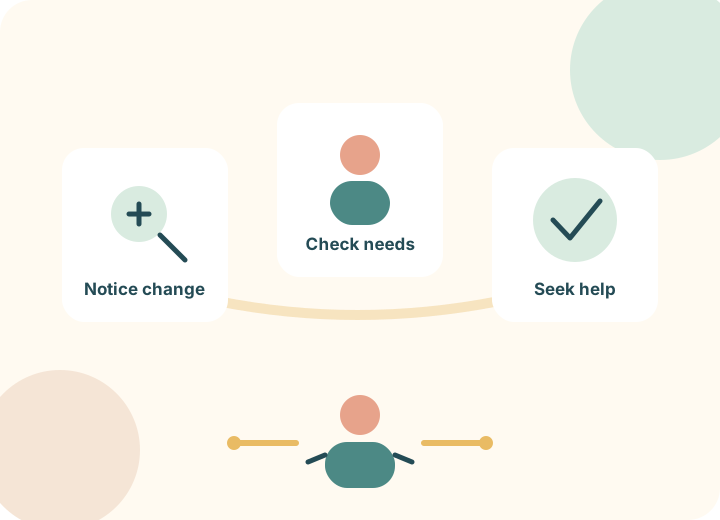
A new pattern deserves a fresh look
If a child suddenly becomes much more distressed, withdrawn, restless or aggressive, do not assume an existing diagnosis explains it. Pain, illness, poor sleep, medication effects, stressful events or changes in demands may contribute. Several factors can occur together.
A child with limited speech may show discomfort through changes in participation, eating, sleep or behaviour. Behaviour is not a reliable way to identify a particular illness, but a new pattern can be a reason to seek healthcare advice.
Check what has changed
Note when the change began and whether it coincided with illness, a medicine change, a new routine, an injury or a difficult event. Include changes in sleep, appetite, toileting, energy and communication. Bring the names of current medicines to the appropriate clinician.
Describe observations rather than trying to diagnose the cause. For example, “wakes crying and avoids sitting” is more useful than deciding that the child has become oppositional. Do not start, stop or change prescribed medication based on a behaviour article.
When not to wait
Seek urgent medical help for serious injury, difficulty breathing, altered consciousness or another immediate danger. Sudden loss of skills, marked unexplained change or signs of significant pain should prompt timely healthcare advice. If you cannot maintain safety, obtain urgent help locally.
These are examples, not a complete triage checklist. If you are unsure how urgent a change is, ask a healthcare professional. Do not wait to complete an ABC diary or attend a routine therapy appointment before addressing a potentially urgent problem.
Consider emotional and environmental changes too
Changes at school or home, frightening experiences, peer conflict and family stress may affect behaviour. Give the child an opportunity to communicate without repeated questioning or suggestions about what must have happened. Take disclosures of harm seriously and seek appropriate support.
An ordinary routine adjustment may help, but it does not replace assessment when the pattern is persistent or concerning. The aim is to understand what has changed, not to decide immediately between a medical explanation and an emotional one.
Prepare a brief timeline for the healthcare professional
Write the last period when your child seemed usual for them, when you first noticed the change and what has happened since. Include concrete differences in eating, drinking, sleep, toileting, movement, interaction or communication. Distinguish what you observed yourself from information another carer supplied.
Bring current medicine names and any recent changes made by a prescriber, along with relevant existing reports. If you do not know a detail, say so. A short factual timeline is more useful than a guessed diagnosis or a video collected at the expense of helping your child.
Support the child while advice is being arranged
Keep familiar communication aids and ordinary comfort available. Explain changes to routines in a way the child understands and let other carers know the relevant observations and agreed advice. Avoid introducing a new behaviour consequence system to explain away an unexplained change.
After a healthcare review, ask what changes should prompt further contact and how activity or therapy should be adapted. If symptoms persist despite an initial explanation, return with the updated timeline. A prior developmental diagnosis should not close the discussion about a new concern.
How behaviour support can fit around healthcare
Once immediate concerns have been addressed, a support plan may help the child communicate discomfort, manage changed routines or return to activities. Share relevant healthcare advice with the professionals involved, with appropriate consent.
IDTC’s routine child support services do not replace emergency or medical care. Ask which professional should review a new concern first. A behaviour plan should remain open to revision when health, communication or environmental information changes.