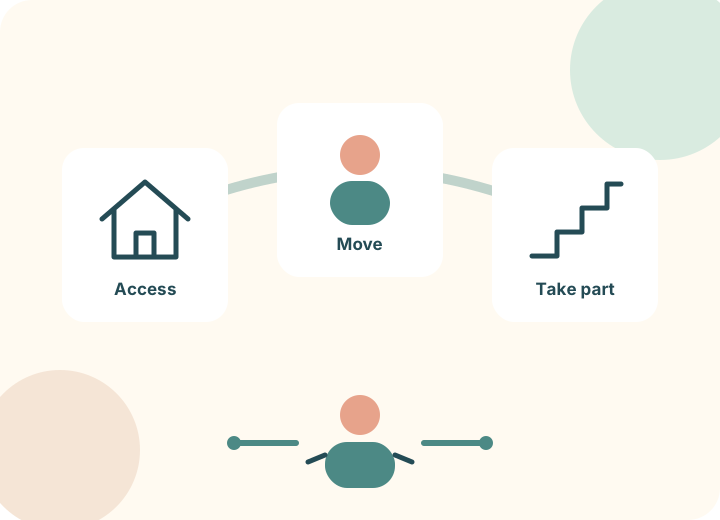
Start with a functional question
Low muscle tone and motor differences can affect development in Down syndrome, but children vary. Ask what activity is difficult: getting into a comfortable position for play, moving around school, handling clothing or using classroom tools. A meaningful goal describes participation, not only a muscle or milestone.
Notice when the difficulty occurs and whether there is discomfort, fatigue or a recent change. A developmental label should not be used to explain away new symptoms. Medical advice may be needed before an exercise or activity plan is changed.
Understand the roles of different professionals
A physiotherapist may assess movement, mobility and related physical needs. An occupational therapist may assess access to daily activities, hand skills and functional participation. Their work can overlap and should reflect their qualifications and the child’s assessed needs.
Ask who will provide the proposed service, what they will assess and how recommendations will be coordinated with medical advice. IDTC’s website should not be taken as confirmation that every specialist service is available. Contact the centre about the relevant clinician or referral before booking.
Observe the task and the environment together
A child struggling with a classroom activity may have difficulty reaching the surface, keeping materials stable, seeing the task or manipulating the tool. Describe the setup as well as the action. Bring a work sample or a description of the furniture and materials to the professional.
Illustrative example: a child understands a matching activity but the small pieces keep sliding away. Discuss accessible materials or an alternative response method. Changing access can reveal what the child knows without treating every unfinished task as a learning failure.
Separate the learning goal from the physical demand
If the goal is choosing an answer, allow an appropriate communication method while motor support is considered. If the goal is a hand skill, choose a relevant activity with professional guidance. The same worksheet should not be expected to assess knowledge, language and fine-motor control all at once without acknowledging those demands.
For dressing, identify whether locating the opening, balancing, reaching or managing the fastening is difficult. An individual assessment can guide adaptations. Do not select braces, weighted equipment, positioning devices or strengthening exercises simply because another child uses them.
Keep movement advice individual and safe
Ask the healthcare or therapy team about suitable activities, any restrictions and what signs should prompt review. This page deliberately does not prescribe stretches, neck exercises or a universal gross-motor programme. Safe participation depends on the child’s health and assessment.
New neck pain, changes in walking, weakness, loss of established skills or significant pain need prompt medical advice. Immediate danger or serious breathing difficulty requires urgent help. Do not interpret new symptoms as a normal part of practising harder or continue a painful activity to complete a target.
Use a review that includes comfort and choice
An illustrative goal might involve participating in a familiar craft activity using an agreed setup. Record the assistance needed, whether the child could make choices and whether discomfort or fatigue limited participation. A finished craft made mainly by an adult tells a different story.
At review, ask whether the setup, task or goal needs changing and who will help implement it at home or school. Movement support should make ordinary life more accessible. It should not require a child to perform age-inappropriate drills for a promised milestone date.