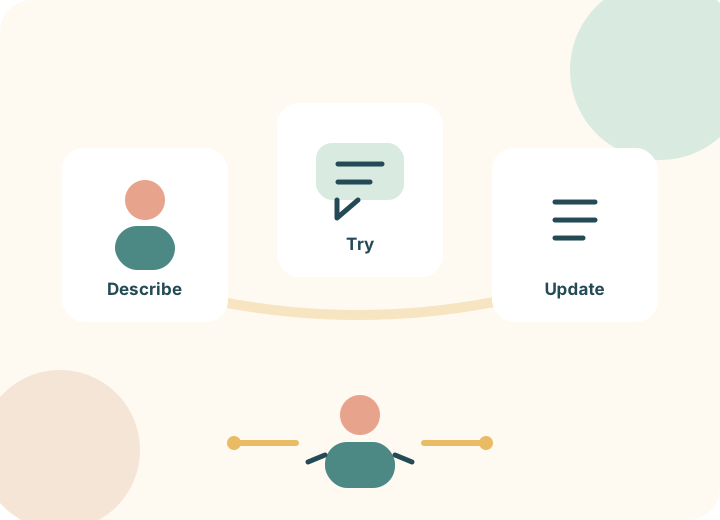
The main points in simple words
- This page should describe how I communicate.
- Ask me what I want included.
- Give people useful instructions for listening.
- Check the passport when something changes.
Choose the reader and the purpose first
Decide where the passport will be used: a therapy appointment, a community activity or an introduction to a new support worker. A short communication document is different from a medical history, emergency care plan or consent form. It should help the reader interact with the adult rather than make decisions about them.
Ask what the adult wants a new person to know. Someone might want listeners to wait, use a particular language or avoid finishing sentences. Keep the wording respectful and adult-focused. First-person wording can be helpful when it reflects the person’s views; do not put a supporter’s interpretation into “I” statements without checking it as carefully as possible.
Turn general labels into useful listener actions
Instead of “communication is poor”, describe a situation and a helpful response. For example: “When the room is noisy, I may show you a message on my phone. Please look at the message before asking again.” This gives the listener something concrete to do and does not reduce the person to a deficit.
Explain the person’s preferred ways to ask questions, disagree, request help or take a break. If a signal is uncertain, say so. A supporter might write, “Turning away can mean several things; ask whether I want a pause.” Avoid claiming that every gesture has one fixed meaning or that one familiar person can always interpret it correctly.
Draft a small set of relevant sections
Useful headings include “How I communicate”, “What helps me understand”, “If you miss my message”, and “How I ask to stop”. Include any communication aid the person chooses to use and practical access information, such as where to place it. The passport should not become a list of demands for the adult to perform before others listen.
Keep contact or health details separate unless they are necessary for the intended use and appropriately agreed. NHS England’s health-and-care passport offers a broader healthcare example; a communication passport does not have to copy its full set of fields. The document here is an original planning outline, not an official NHS form.
Worked example: testing it with a new listener
Imagine an adult bringing a passport to a first community workshop. The draft says, “I use my phone to show words when you do not understand my speech. Please wait while I find the message.” With the adult’s agreement, the facilitator reads it and tries an ordinary conversation about which activity the person wants to join.
Afterwards, ask the adult whether the facilitator waited long enough and understood the message. The facilitator can identify anything unclear, but the adult’s experience remains central. If the phone was difficult to access at the table, add an agreed practical adjustment. Do not turn the trial into a public demonstration of the person’s difficulties.
Decide how copies will be shared and updated
Agree who may see the passport, where it will be kept and how the adult can ask for changes. A printed copy, private phone document or another accessible format may suit different settings. Avoid putting private personal information in a public link or unrestricted QR code simply because it is convenient.
Add a review date and identify who helps update the document. Check it when communication methods, preferences or settings change. If someone receives an old copy, explain which instructions are no longer current. Sharing the passport should support direct conversation, not encourage staff to discuss the adult only with relatives.
Know what the passport cannot replace
A passport does not establish diagnosis, legal capacity, permission for treatment or a person’s current wishes in every situation. Continue asking the adult and responding to what they communicate now. If a familiar method stops working or communication changes significantly, seek appropriate assessment rather than relying on the old document.
A qualified speech and language professional can help when the person’s communication or access needs are complex. Ask IDTC about the suitability of adult communication support and what experience the clinician has. A useful review considers whether misunderstandings are easier to resolve and whether the adult feels heard, not simply whether a form has been completed.
Communication passport drafting sheet
Use these prompts in a private note or print this page. This website does not collect your answers. Examples are illustrative; adapt them with the adult.
| Section | Example wording to adapt |
|---|---|
| How I communicate | I may use speech and a written message together. |
| What helps me understand | Explain one part, then give me time to ask a question. |
| If my message is unclear | Tell me the part you understood and ask about the rest. |
| How I ask to pause | Record my agreed words or signal, without guessing. |
| Sharing and review | Who may see this, who helps update it, and the review date. |