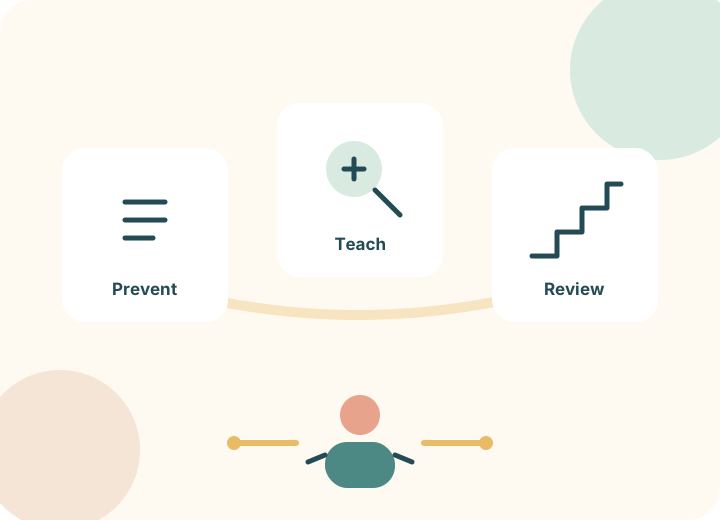
Choose a goal that matters to the child
A plan is an agreement about support, not a list of everything adults want stopped. Begin with one difficulty that affects safety, learning, communication or family life. Write the goal as something the child can do with appropriate help.
For example, “show the help card during a difficult activity” gives everyone something to teach. “Stop being stubborn” does not. Goals should fit the child’s developmental level and allow harmless movement, individual preferences and appropriate refusal.
Describe the starting point
Write down what usually happens, in which situations and what effect it has. Include strengths and helpful conditions. If a child already asks for help with a familiar adult, that is a useful starting point for teaching the skill in another setting.
Record likely contributing factors as working explanations, not facts you have proved. A plan can say “long spoken instructions may be difficult” while assessment continues. Health concerns need suitable medical attention rather than being managed only through consequences.
Set out prevention and teaching
List practical changes adults can make before a difficulty arises: a clearer instruction, a quieter place, a visual warning or a task broken into achievable steps. Then name the skill to practise when the child is calm, such as requesting a break, waiting briefly with support or choosing between two activities.
An illustrative plan might say: before a writing activity, show one short task; make the help card available; respond promptly to a help request; and offer supported practice. The details must be adapted to the individual child, not copied as a universal prescription.
Agree a safe response
Describe early signs of distress and how adults will reduce demands or stimulation and protect people nearby. Keep language brief during escalation. The plan should say whom to contact and when the situation needs urgent help.
Do not include humiliation, physical punishment, withholding essential needs or a requirement to endure escalating harm. This guide does not teach restraint or seclusion. If serious aggression or self-injury is occurring, ask for an individual professional safety plan; seek emergency help when someone is in immediate danger.
A short plan you can discuss with a professional
Illustrative priority: joining a manageable homework activity and asking for help. Starting point: the child pushes a full worksheet away but sometimes answers a spoken question. Preparation: the adult checks the task level, presents one question and makes the familiar help signal available. Teaching: the adult models the signal during calm practice and responds by helping with the difficult step.
Response: acknowledge the request, adapt the activity and support a pause when needed. Record: what was offered, whether the child could participate and how much help was required. Responsibility: name the adult who prepares the materials and the person who will discuss the task with school. Review: agree a date and an earlier contact route if distress or safety worsens. This is a planning example, not a ready-made treatment prescription.
Check whether the plan is usable before starting
Ask each adult to describe what they would actually do during the routine. If the picture card is kept in a locked cupboard or the named adult is unavailable at the relevant time, the plan has a practical gap. Decide how the child will get help in that situation before expecting them to use the new skill.
Include the child’s preferred words, gestures or pictures, along with any signs that they need support sooner. Keep essential health and safety information accessible to the appropriate carers. A longer document is not necessarily more useful; the everyday summary should make the next action clear.
Make ownership and review explicit
Name the adults responsible, the resources they need and a realistic review date. Share only relevant information with school or other carers through an agreed channel. Check that everyone understands the plan rather than assuming that receiving a document is enough.
Review participation, communication, distress, incidents and practical burden. If the plan is not helping, reconsider its assumptions, the task demands and the support available. A useful plan changes with the child; it is not a test that the family passes or fails.