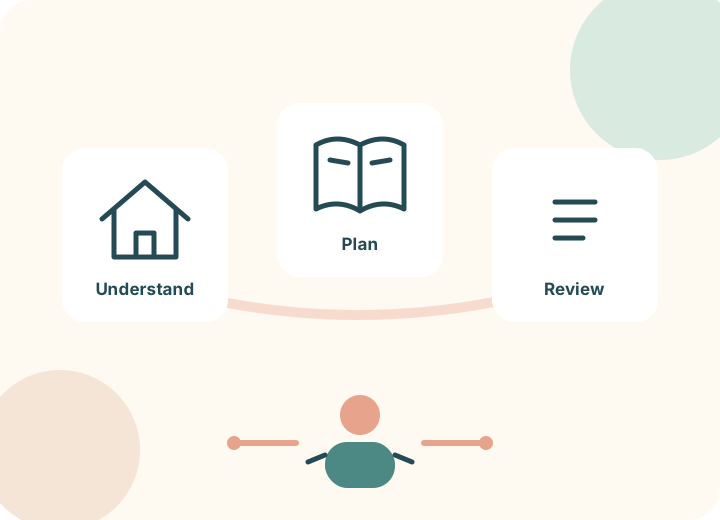
Start with a question, not a label
A useful assessment begins with what is affecting your child’s life. Perhaps leaving home has become unsafe, homework ends in tears, or the child cannot make a need understood. Describe the situation and its effect on participation, relationships or safety. Words such as naughty, manipulative or stubborn do not explain what support is needed.
This pathway is for parents, teachers and students learning about child behaviour. It brings together observation, assessment and planning without assuming that every difficulty is a disorder. A behaviour consultation, a formal diagnostic assessment and a school report may be different services; ask what an appointment includes.
Gather the whole picture
Relevant information may include communication, learning, sensory experiences, sleep, health, emotional wellbeing and what happens around the difficulty. The child’s preferences and explanations matter alongside adult observations. A professional should also ask what goes well, not only what is hard.
Use a few examples from home and school where possible. A diary can help, but it is not an entrance requirement for care. If there is injury, sudden change or another health concern, seek appropriate help without waiting to finish a week of notes.
Understand what a functional assessment can and cannot show
A functional behaviour assessment explores factors associated with a behaviour and develops an explanation that can be checked over time. It is not a personality judgement or a way to prove that a child is choosing distress. The same action can have different explanations on different occasions.
An ABC record captures what happened before, the observable action and what followed. It can inform assessment but does not prove a cause on its own. Formal assessment methods should match the professional’s training and the child’s needs. Families should not deliberately provoke unsafe behaviour to test a theory.
Turn understanding into a usable plan
A written plan should connect a meaningful goal with prevention, communication or coping skills, adult responses and review arrangements. For example, a child struggling to start writing might need the task adapted and an easy way to request help. Simply demanding a longer period of sitting would miss that question.
Agree who does what and which settings the plan covers. Keep an everyday version short enough for a busy carer or teacher to use. Include what to do if the child becomes more distressed and when to seek further advice.
Review benefits, burden and safety
Look for increased communication, participation and recovery, as well as changes in incidents. A child becoming unusually quiet or withdrawn is not automatically making progress. Ask what the child experiences and whether the plan can realistically be used at home and school.
For students, the key distinction is between an observation, a hypothesis and a conclusion supported by assessment. An illustrative case is not evidence about a real child. Do not collect identifiable information for coursework without appropriate permission and supervision.
Choose the assessment question before the appointment
Write down the decision you need help making. “Why is getting dressed painful?” may call for a health review as well as functional support. “Can my child understand the classroom instructions?” raises a communication question. “How can we make leaving the playground safer?” calls for a practical support and safety discussion. More than one professional may be needed; buying a larger assessment package is not automatically the right first step.
Ask what information the clinician will use, what feedback you will receive and what the assessment cannot answer. Mention existing reports so that useful work is not repeated unnecessarily. If school information is unavailable, explain this; it should become a limitation to consider, not a reason to invent a complete picture.
A worked pathway from concern to review
Illustrative example: a child leaves the table whenever written homework begins. The family brings the actual worksheet and describes what happens during drawing, spoken answers and writing. The clinician asks about understanding, comfort, task difficulty and the child’s own account before deciding which assessments are useful.
The first agreed support might be reading one question together and offering an accessible help signal. At review, the family reports whether the child could participate, how much help was needed and whether discomfort continued. If spoken answers are easy but writing remains painful, that observation changes the next question; it does not prove defiance or a particular diagnosis.
A useful written summary separates what was observed, what remains uncertain, which changes were agreed and who will follow up. Keep a copy that you can understand and use. Ask for clarification if a report lists scores without explaining what they mean for everyday support.
Ask about support at IDTC
IDTC provides child behavioural support and parent coaching in Multan, with related communication, psychology and learning services. Ask which professional will assess the concern, whether a functional assessment is appropriate, and what written feedback or coordination is included.
A child support appointment does not automatically include a psychiatric diagnosis, medication or a formal school certificate. Confirm the clinician, fee and appointment format before booking. Bring one priority and any useful observations; you do not have to solve the problem before asking for help.