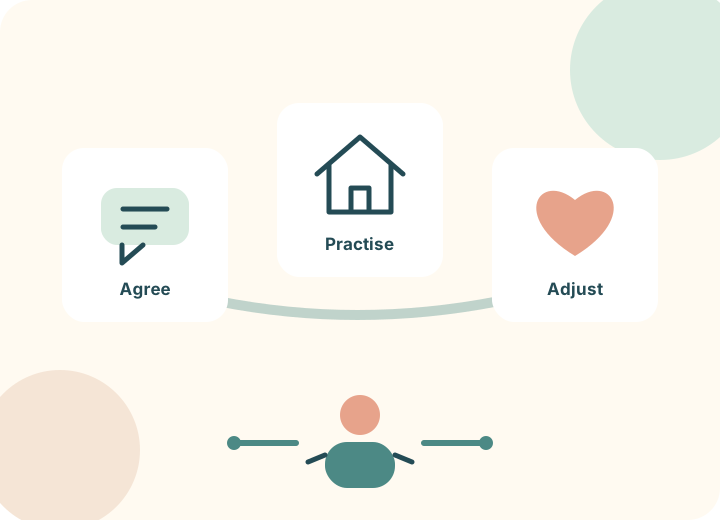
Consistency is shared understanding, not identical scripts
A child may spend time with parents, grandparents, relatives and other carers. Different routines are normal. What helps is agreement about safety, accessible communication and a few priorities, rather than expecting every adult to behave in exactly the same way.
Start with the child’s needs and strengths. Avoid framing one carer as the person who has caused the problem. Adults may have different information, practical constraints and experiences with the child.
Choose one shared priority
Pick a difficulty that matters and describe it plainly. Agree the skill to teach and the support the child needs. For example, everyone might make the same help picture available during a difficult routine and respond when the child uses it.
Keep the plan short. A long list of rules is difficult to remember during a busy day. Explain what to do before the activity, what helpful communication looks like and how to respond if the child becomes distressed.
Practise outside the difficult moment
Talk through an example when everyone is calm. Ask each carer to explain the plan in their own words and identify anything that will be hard to use. Adapt the plan to language, literacy, time and available space.
A grandparent may find a picture more useful than a written checklist; a carer collecting the child from school may need a brief handover. These are practical differences, not evidence that one person is less committed.
Keep a way to share observations
Use a small, private record of relevant changes, such as poor sleep, a successful request for help or a difficult transition. Share only what each person needs to support the child. Avoid public messaging groups containing sensitive details, videos or labels.
The child’s preferences and privacy matter too. Older children can help decide what adults should know and how they want support offered. Essential safety information may need wider sharing through appropriate channels.
A handover example for parents and grandparents
Illustrative priority: making leaving play easier. Agree a familiar warning, an accessible way to ask for help and one manageable next step. A grandparent can use the same picture even if they speak a different home language. The purpose is a recognisable message, not identical wording or a demand that every household have the same schedule.
Before handing over, mention changes that matter, such as discomfort or a missed meal. Afterwards, share one useful observation: what the child understood, what support helped or where the routine became difficult. Keep the discussion about the arrangement rather than who is the stricter adult.
What to do when someone misses a step
First restore the support the child needs. Then discuss whether the plan was visible, realistic and understood. If an adult cannot prepare materials during a busy collection time, move preparation earlier or simplify them. Do not ask the child to tolerate confusion as a test of consistency.
Where adults disagree about safety or use of punishment, ask the supporting professional to explain the plan and its boundaries together. Agree whom carers can contact when unsure. A workable plan includes support for the adults as well as expectations for the child.
Review disagreements without blaming the child
If carers disagree, return to the goal and the evidence. Is the task manageable? Does everyone understand the communication signal? Are there health or emotional factors that the plan misses? Consistency cannot make an unsuitable plan appropriate.
Ask for parent coaching or a professional review when disagreements persist or the situation is unsafe. A useful plan should reduce strain and improve participation; it should not require adults to ignore distress in order to prove that they are being consistent.