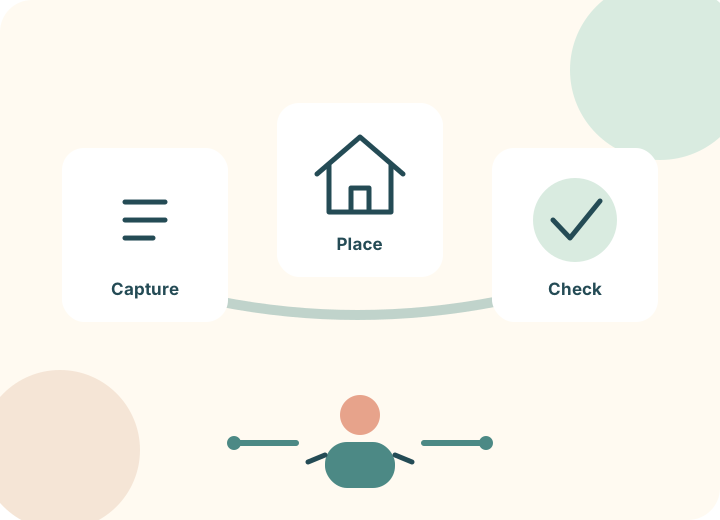
Find one recurring point of friction
Choose a concrete problem: keys are hard to find, bills are missed, documents are scattered or tasks disappear between messages. Ask where the item or information first enters your day and where it needs to go next.
A useful system fits the way you actually use the space. If a storage place is inconvenient or hidden, it may be less useful than a simple visible tray. Consider privacy and safety when choosing what can remain in view.
Give important items a consistent home
Choose an easy place for frequently used belongings and practise returning them there. Put the cue near the action: a bag checklist near the exit, for example. Avoid creating so many labelled categories that using the system becomes another demanding task.
- Keep one landing place for essential everyday belongings.
- Use one trusted list to capture tasks from different messages.
- Separate items needing action from items kept only for reference.
- Arrange secure storage for medicines, identity documents and private records.
Turn reminders into next actions
“Paperwork” does not explain what needs doing. Write “find the electricity bill and check the due date” or another small action. When a task depends on someone else, record the question to ask and when to follow up.
For example, a person who repeatedly forgets an appointment document might place it in the bag when the appointment is booked, if safe and practical. That reduces reliance on remembering at the last minute. It is an option to test, not a rule that suits every household.
Keep maintenance brief
Set aside a short recurring time to clear the landing place, check the calendar and remove completed tasks. A system that requires an hour of sorting every evening may be difficult to sustain. Keep only the categories that help you find or act on things.
If you share a home, agree on which spaces and reminders are shared. Do not move another adult’s belongings or take over their accounts without consent. Discuss how to help while preserving privacy, choice and responsibility.
Know when forgetfulness needs assessment
Longstanding organisation difficulties may be part of ADHD, but forgetfulness is not specific to it. New, worsening or sudden changes in memory deserve medical advice, particularly with other health symptoms. Sleep, mood, stress and medicines can also affect concentration.
At IDTC, adults can discuss practical functioning and psychological support needs. Bring one example and the systems you have already tried. A manageable goal might be fewer missed essential tasks or less time spent searching, rather than a perfectly tidy home. Assessment and treatment decisions should consider the wider picture.