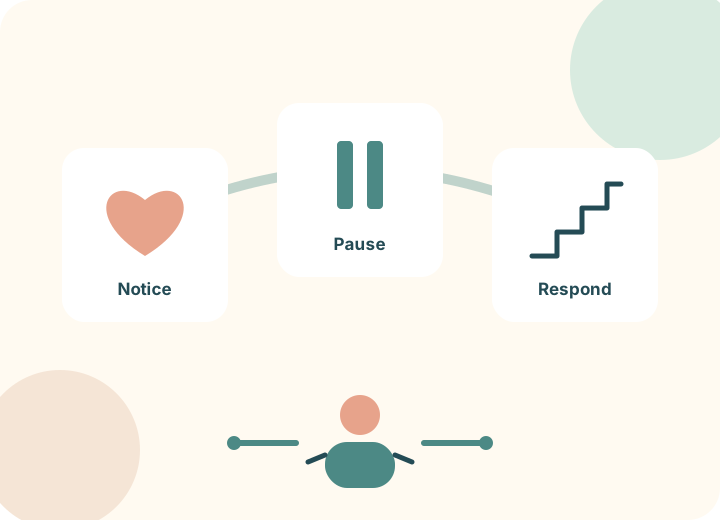
Map the situation before choosing a technique
Notice what tends to happen before you feel overwhelmed: several demands arriving together, losing track of a task, criticism, uncertainty or poor sleep. Record what you feel, what you do and what follows. The point is to understand a pattern, not to judge yourself for having an emotion.
Anxiety, depression, trauma, relationship strain and other health concerns may also be relevant. Do not assume every emotional reaction is an ADHD symptom or use an online label as a substitute for assessment.
Agree on a practical pause
When possible, make a plan for stepping back before a conversation or task escalates. Explain what the pause means and when you will return. A break is more useful when it leads to a next step rather than leaving the other person uncertain indefinitely.
- Use a short phrase to ask for time or clarification.
- Reduce one immediate demand if the situation allows it.
- Move to a less distracting place when safe and appropriate.
- Return to the issue at an agreed time with one point to discuss.
Address the problem after the intensity reduces
Ask whether a task was unclear, a deadline unrealistic or a conversation misunderstood. Choose a response that addresses that cause. A breathing exercise may help some people settle, but it cannot resolve an impossible workload or replace a difficult conversation.
For example, if repeated interruptions lead to snapping at a colleague, the plan might include an agreed way to flag urgent messages and a brief apology for the hurtful response. Understanding a trigger should support responsibility and repair, not excuse harmful behaviour.
Build goals around daily functioning
A useful goal might be asking for clarification earlier, recovering from a setback with less disruption or discussing a disagreement without threats. “Never feel angry” is not a realistic treatment target. Track whether the response helps you and the people affected.
Supporters can be involved with consent, but they should not be expected to monitor every emotion. Privacy, boundaries and choice remain important. If a strategy repeatedly adds shame or pressure, discuss changing it with the clinician.
When to seek more support
Seek assessment if emotional difficulties are persistent, severe, damaging relationships or interfering with work and daily life. Mention changes in sleep, unusually high energy, prolonged low mood or other new symptoms. Immediate danger or risk of serious harm requires urgent local medical help rather than a routine appointment.
IDTC can discuss adult emotional-regulation and psychological support in Multan and online. Ask what approach is proposed, how progress will be reviewed and whether medical assessment is also needed. This page does not establish a specific therapy certification or promise a particular outcome.