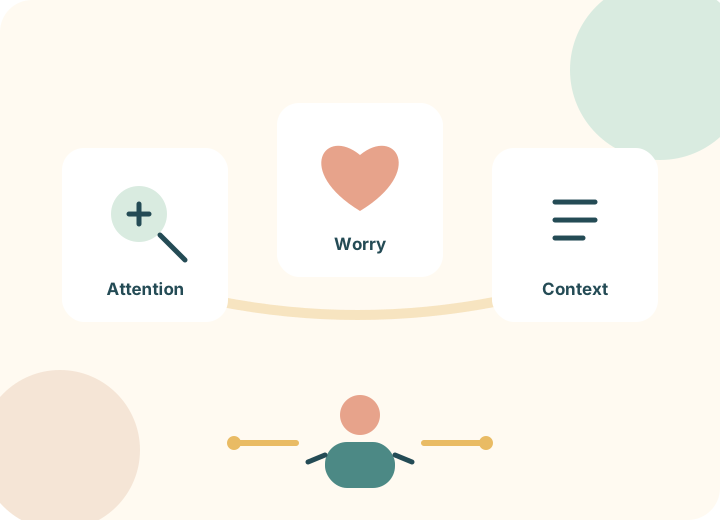
Start with the timeline and situation
Describe when attention difficulties began, where they occur and whether worry is prominent. ADHD involves a developmental history beginning in childhood. Anxiety may involve persistent fear or worry, but its pattern also needs individual assessment. Neither condition can be identified from one everyday example.
Ask what happens before the person loses focus. They may be distracted by a worry, lose track of instructions, feel physically restless or struggle with several demands at once. Similar behaviour can have different explanations, and more than one explanation may apply.
Avoid simple either-or rules
Being able to focus on an enjoyable activity does not rule out ADHD, and worrying about unfinished work does not mean anxiety explains everything. Difficulties with organisation can create stressful situations, while anxiety can make starting or completing tasks harder.
- Note longstanding patterns as well as recent changes.
- Describe worry, avoidance and physical tension if present.
- Include sleep, mood, learning and relevant health concerns.
- Bring examples from home, work or school rather than one setting alone.
Assessment should consider both
An appropriately qualified professional should explore the broader history and impact. A rating scale may contribute information, but it should not decide the answer by itself. Ask what other conditions have been considered and how any uncertainty will be followed up.
For a child, parent and school observations can be useful alongside the child’s own account. For an adult, current responsibilities and childhood history both matter. A sudden marked change deserves attention even when the person already has an ADHD diagnosis.
Choose support for the actual difficulty
A clear task sequence may help someone who loses track of steps. A conversation about persistent worry may be needed when fear makes the task difficult to approach. These supports can coexist, and neither response proves a diagnosis.
For example, a student may benefit from written assignment stages and support addressing fear of failure. The plan should not insist that all difficulties belong to one label. Medication decisions and changes require a qualified prescriber who understands the overall health picture.
What to bring to an appointment
Write a short account of the most troublesome situation, what you think about at the time and what you do next. Include what has helped and what you have already tried. Ask how the proposed support addresses attention, anxiety or both, and how progress will be reviewed.
IDTC offers adult anxiety and psychological support and child-focused services in Multan, with adult online appointments by arrangement. Confirm the appropriate clinician and scope. Educational information should help you ask better questions, without encouraging self-diagnosis or postponing care for persistent distress.