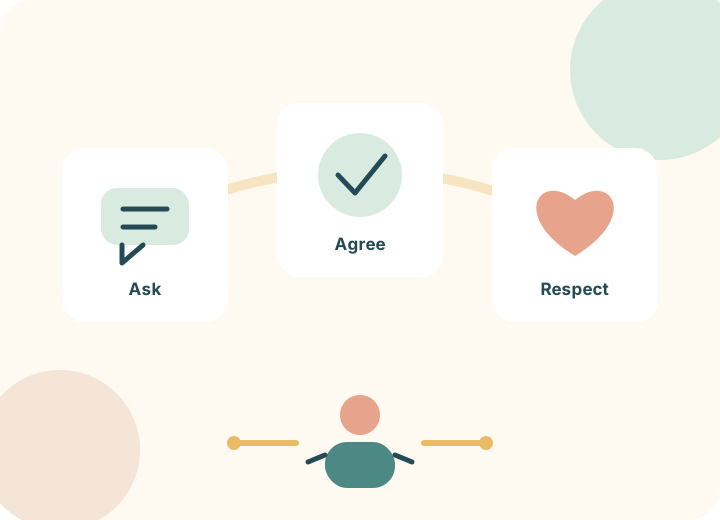
Ask before solving the problem
A person may want listening, practical help, a reminder or company while starting a task. Ask which kind of support would be useful. Do not assume that a diagnosis tells you their preferences or that help should be imposed because you think it would work.
For children, involve them in choices at a level they can understand while adults meet their care and safety responsibilities. For adults, consent should guide participation and information sharing. A need for communication support does not remove the person’s right to be involved.
Make the offer concrete and limited
“I can sit with you while you make the appointment” is easier to accept or decline than “I will sort everything out”. Agree what you will do, what the person will do and when to check back. Be honest about your own time and limits.
- Ask how and when reminders should be given.
- Offer help with one step rather than the entire project.
- Keep important information in an agreed place.
- Revisit the arrangement if it creates pressure or resentment.
Protect dignity and privacy
Avoid teasing about forgetfulness, publicly correcting the person or sharing their diagnosis without a good reason and appropriate permission. Do not access private accounts, messages or medical information simply because you are helping. Share only what is needed with a teacher, employer or clinician.
For example, a supporter might help write three questions for an appointment and then ask whether the adult wants company in the consultation. The adult may prefer to attend alone or have part of the conversation privately. Support can remain useful without being present for everything.
Notice needs beyond organisation
Pain, poor sleep, anxiety, low mood and stressful circumstances can affect daily functioning. Do not interpret every difficulty as ADHD or every request for rest as avoidance. Encourage appropriate assessment when something changes or the person is struggling persistently.
If there is immediate danger or serious risk of harm, seek urgent local help. Ordinary planning tips are not a response to a crisis. Equally, a diagnosis does not justify coercion, threats or harmful treatment by anyone involved.
Look after the relationship as well as the task
A reminder system that gets a task done but damages trust needs review. Ask whether the help feels respectful and whether responsibilities remain fair. Supporters can need their own information and rest without making the person feel like a burden.
IDTC can discuss support with individuals and families within the agreed appointment scope. Ask whether caregiver guidance or a joint conversation is appropriate, and how consent and confidentiality will be handled. Good support is collaborative and adaptable; it should not depend on one helper monitoring every part of another person’s life.