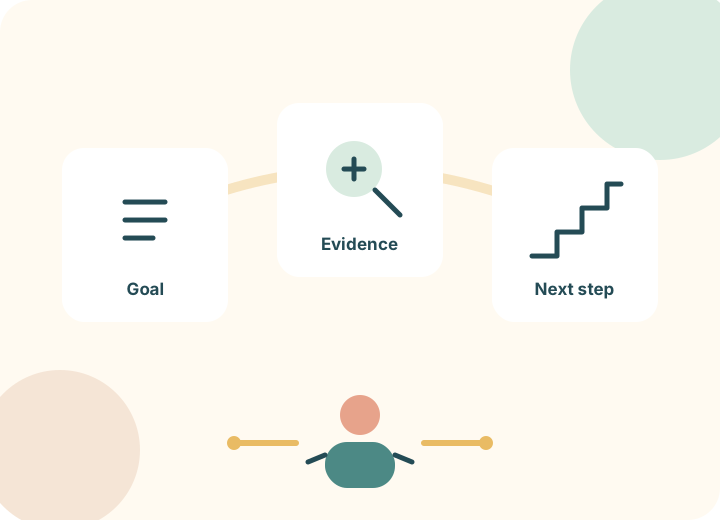
Agree on the goal before measuring progress
Choose a specific outcome that matters to the person or family: starting schoolwork with less prompting, keeping appointments or handling a transition with less distress. “Be normal” or “never get distracted” is neither respectful nor a useful way to judge care.
Record the starting point simply. You might note how often a task is missed, what help is needed or how stressful a routine feels. Include the child’s or adult’s own view rather than relying only on observers’ ratings.
Track a small amount of useful information
A brief record is more likely to be sustained than a detailed diary of every behaviour. Note the situation, support used and result. Include changes in health, sleep, school or work that could affect the outcome.
- Describe improvements as well as ongoing difficulties.
- Note whether a strategy is practical between appointments.
- Record unwanted effects or distress associated with the plan.
- Bring questions about anything you do not understand.
Review the support, not just the person
If a plan is not helping, ask whether the goal is appropriate, the task is understood and the environment supports success. More reminders or greater pressure are not automatically the answer. A strategy may need adaptation, a different approach or further assessment.
For example, a child may complete more work but become increasingly distressed. That outcome calls for a broader review, not simply praise for productivity. An adult may miss fewer appointments but rely on an arrangement that places an unsustainable burden on a partner. Consider benefits and costs together.
Keep medical follow-up with the prescriber
If medication is part of care, report benefits, side effects and relevant health changes to the prescribing professional. Ask what monitoring is required and who is responsible for it. Do not change or stop a medicine based on a routine support checklist.
Psychological or educational sessions should complement appropriate medical care when needed. Sharing information between professionals requires suitable consent and confidentiality arrangements. Know whom to contact for a routine question and whom to contact when a new concern cannot wait.
Leave with a clear next step
Ask what will stay the same, what will change and when the plan will be reviewed again. Confirm costs, appointment frequency and any practice expected between sessions. If a referral is suggested, clarify what question it is intended to address and how to follow it up.
At IDTC, ask the clinician to connect each recommendation to an agreed goal and explain the limits of the service. Children, adults, parents and supporters should understand their roles. Progress varies, and no responsible review can promise a cure, a fixed timetable or a guaranteed academic or work outcome.