Identify the social moment that is hard
A child may want to join in but interrupt, miss a rule or react quickly when a game changes. Another child may lose track of a conversation. These examples can occur for many reasons; they do not by themselves establish ADHD or explain all friendship difficulties.
Ask the child what they enjoy and who they feel comfortable with. Include their account of exclusion or teasing. Adults should not assume that a child’s behaviour makes them responsible for bullying or that every social difficulty can be solved by practising harder.
Make practice small and supported
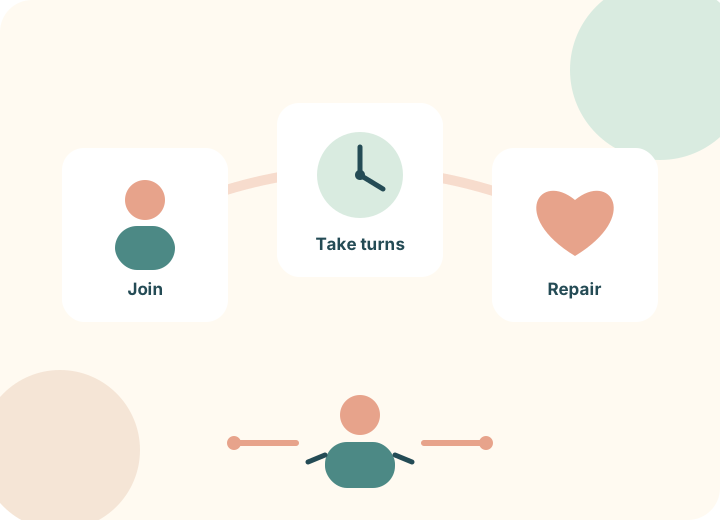
Choose an activity the children both enjoy, with a clear start and finish. A smaller group or predictable game can make it easier to practise waiting and sharing ideas. An adult can model a brief phrase, then step back enough for the child to participate naturally.
- Practise “Can I join?” or another comfortable way to enter a game.
- Agree on a visible turn cue if waiting is confusing.
- Explain a rule change before restarting an activity.
- Make it acceptable to ask for a break or choose another game.
Help repair a disagreement
After everyone has settled, describe what happened without assigning a character label. Help the child notice the other person’s perspective and choose a practical repair, such as returning an item or explaining a misunderstanding. A forced public apology may produce words without understanding.
An illustrative example is two children arguing after a turn was missed. Using a simple turn marker can reduce confusion next time. The adult can help both children agree on the rule rather than asking only the child with ADHD to change.
Work with school on belonging
Ask the teacher about less structured times such as lunch, transitions and the playground, as well as lessons. Support might involve a planned activity, a trusted adult to approach or clearer arrangements for joining a group. Protect the child’s privacy; classmates do not need access to diagnostic information to practise kindness and clear rules.
Bullying, threats or repeated exclusion need an adult response under the school’s safeguarding arrangements. Do not treat them merely as evidence that the child lacks social skills. Keep a factual record and agree who will follow up.
Check whether practice transfers to real play
A child may use a turn-taking phrase with an adult but find it hard to enter a busy playground game. Ask what changes between the two situations: speed, noise, unclear rules or the response of peers. Practise in a manageable shared activity, then arrange support in the setting where the child actually wants to join in.
An illustrative review asks whether both children enjoyed the activity and could ask for a break, not simply whether one child waited silently. If another child repeatedly excludes or hurts them, address that behaviour with the responsible adults. More social-skills practice for the child with ADHD cannot replace a safe and welcoming environment.
Choose goals that matter to the child
A useful goal could be enjoying one regular activity with a peer or knowing what to do when a game feels unfair. Having many friends, making eye contact or appearing still should not be automatic targets. Friendships should allow room for different communication styles and preferences.
If difficulties persist, ask about support that considers communication, emotions, the environment and the child’s own wishes. IDTC’s child and social-skills services can discuss whether individual work, caregiver guidance or coordination with school is appropriate.