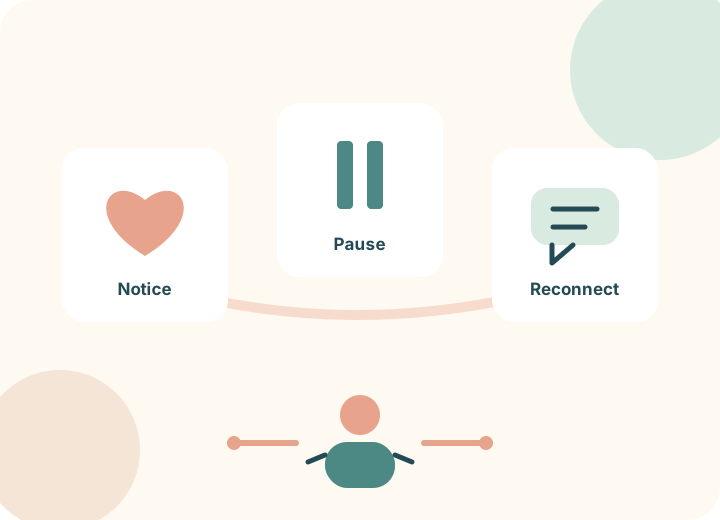
Look beyond the visible outburst
Notice what happened before the difficulty: a long task, misunderstanding, hunger, a noisy setting or an unexpected change. Also notice what the child was trying to communicate. Describing the sequence is more useful than deciding that the child is “attention seeking”.
Emotional difficulty may occur alongside ADHD, anxiety, learning needs or stressful experiences. It should not be used as a shortcut to a diagnosis. A child can need support with feelings even when ADHD is not the explanation.
During distress, reduce the demands
Keep language brief and give space where it is safe to do so. Offer a familiar way to ask for help or a break. Some children want an adult nearby; others need less talking and fewer people around them. Learn these preferences when everyone is calm.
- Move hazards or other people away if needed for safety.
- Avoid public criticism, threats and a long lesson during distress.
- Use a short, predictable message about the immediate next step.
- Seek urgent help if there is immediate danger or serious injury.
Teach a replacement skill later
Once the child has recovered, practise an action they can use next time: saying “help”, showing a break card or asking what happens next. Make the alternative easier to use than the behaviour you hope to change. The goal is communication and coping, not hiding all signs of distress.
For example, if a difficult worksheet repeatedly leads to tearing paper, try a help signal and a smaller first section. The adult needs to respond to the signal consistently. Praising the use of that signal is more informative than praising the child for being “good”.
Make progress measurable and fair
Choose a small goal with the child where possible. You might track whether they asked for help, how quickly support arrived or whether a task was made manageable. Counting only outbursts can miss improvements in communication and overlook demands that remain unsuitable.
Do not remove harmless movement or self-calming actions just because they look different. If a strategy increases shame or distress, pause and review it. Support should preserve dignity and maintain ordinary access to food, rest, play and relationships.
Prepare for the difficult moment while everyone is settled
Ask the child which adult response feels helpful and how they can signal that something is becoming too much. Agree a short response and keep any communication support available in the relevant place. The plan should also say how adults will protect other people if safety is affected.
For example, losing a game may be easier to discuss during calm play than just after a disagreement. Practise how to ask for a pause or choose another activity, without deliberately engineering distress. Later, review whether the child could communicate and rejoin something meaningful. If recovery is becoming harder, seek advice rather than continually increasing the demand to stay calm.
When to involve a professional
Seek advice if episodes are frequent, intense, harming relationships or preventing ordinary activities. Mention new symptoms, persistent low mood, worries, sleep problems and any risk of harm. These may need a broader assessment alongside behavioural support.
IDTC can discuss psychological and behavioural goals with families in Multan. Ask how the child and caregivers will participate, how safety concerns are handled and when another professional should be involved. There is no single calm-down technique that works for every child.