Describe the sleep difficulty precisely
Separate difficulty settling from waking repeatedly, waking very early or being sleepy during the day. Ask about worries, uncomfortable sensations, noise and the room environment. An older child may be able to explain that lying still is difficult or that tomorrow’s school day is on their mind.
A short record can show patterns: bedtime, approximate sleep time, night waking, morning waking and daytime tiredness. Include changes to routine and prescribed medication timing without changing the medicine yourself. A rough record is enough to start a useful conversation.
Make the evening more predictable
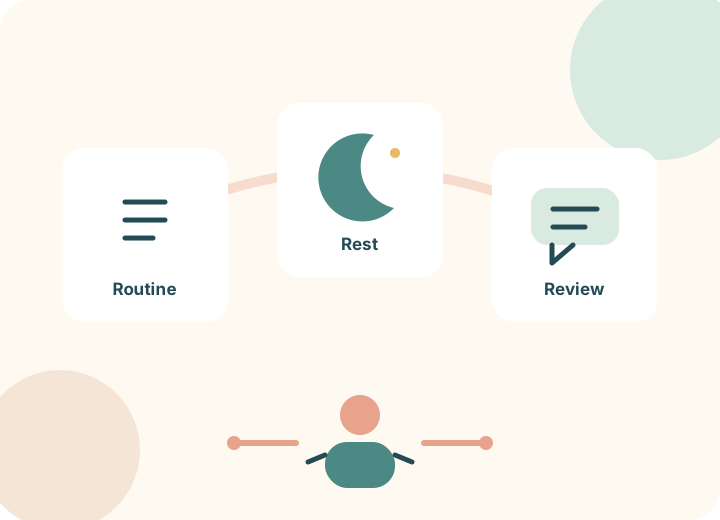
Try a repeatable sequence that gradually reduces stimulation. Keep the final activities simple and achievable for your household. If switching away from a game is difficult, explain the stopping point in advance and plan what comes next. Screens are one part of the routine to review, not a complete explanation for ADHD.
- Keep sleep and waking routines reasonably consistent.
- Put tomorrow’s preparation earlier in the evening where possible.
- Use a brief visual sequence if spoken reminders create conflict.
- Notice whether noise, light, heat or uncomfortable clothing interferes.
Avoid turning bedtime into another performance test
A child cannot earn sleep by behaving well, and being exhausted does not always make settling easy. Calm support and a predictable response may help more than repeated warnings. Do not keep a child awake as a behavioural punishment or require them to lie still for an unrealistic period.
For example, a child who leaves bed to ask about tomorrow may benefit from a short planning conversation before the final bedtime step. That is a practical trial, not proof that anxiety explains every night waking. Review what changes rather than adding many rules at once.
When to ask for medical advice
Discuss persistent sleep difficulty, loud snoring, pauses or gasping during sleep, marked daytime sleepiness or unusual night-time events with a healthcare professional. These concerns deserve assessment rather than being automatically attributed to ADHD. Sudden or severe symptoms need prompt medical attention.
If difficulties appeared after a medication change, contact the prescriber. Do not stop, increase or move doses based on an internet article. Supplements, including melatonin, should also be discussed with an appropriate clinician; this page does not provide a dose or establish that a supplement is suitable.
Bring sleep into the support plan
Tell the teacher and therapist if sleep is affecting participation, sharing only what is needed. Expectations may need adjustment while the cause is being explored. At IDTC, sleep observations can inform a discussion about routines and psychological support, while medical sleep concerns need medical assessment.
The goal is a workable plan that addresses the actual difficulty. Better sleep may improve everyday functioning, but it does not confirm or rule out ADHD and should not be presented as an ADHD cure.