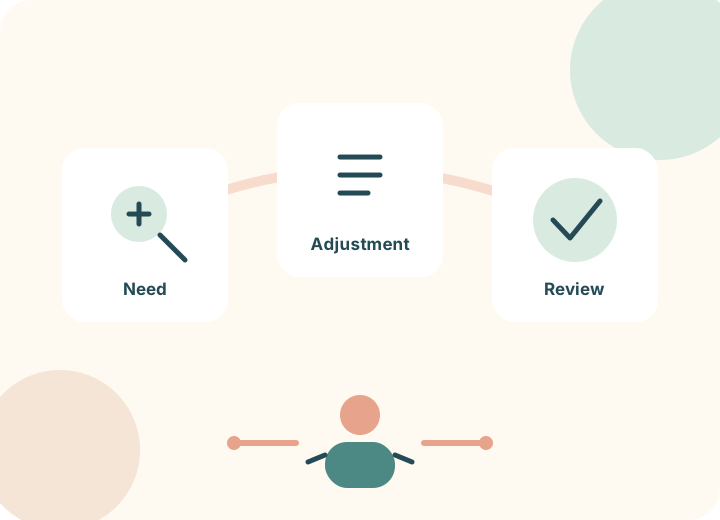
Begin with the pupil’s experience
Ask which lessons, tasks or transitions feel hardest and where the pupil feels successful. Compare this with the teacher’s observations and the family’s account. “Loses the place while copying from the board” points to a more useful adjustment than “needs to concentrate”.
Agree on one or two priorities before making a long list. A plan should support access to learning, participation and wellbeing, not simply make the classroom quieter. Include the pupil’s strengths and preferred ways of receiving help.
Match the adjustment to the difficulty
If a pupil loses track of long instructions, try a short written or visual sequence and check understanding. If organisation is the difficulty, a predictable system for materials may be more useful than extra reminders. Planned movement can be considered without withholding breaks as punishment.
- Difficulty starting: show the first small step and check back briefly.
- Losing the task sequence: keep steps visible on the desk or board.
- Distracting surroundings: discuss a workable seating or workspace change.
- Missing assignments: use one agreed place for recording homework.
Write down responsibilities
Specify who provides each support and when it will happen. “Teacher checks the pupil understands the first step at the start of independent work” is clearer than “give support”. Agree how a substitute teacher will access essential practical information without unnecessary sharing of private records.
An illustrative plan might trial a two-step task card for one lesson each day. The teacher records whether the pupil started with fewer prompts, while the pupil reports whether the card was useful. Review both learning and stress rather than counting only completed pages.
Review and adjust together
Choose a realistic review date and a simple way to exchange information. Daily long reports can overwhelm teachers and families; a brief agreed note may be enough. If the plan is not working, look at the task and support rather than assuming lack of effort.
Check for learning, language, sensory, emotional or sleep-related needs that may require additional assessment. A diagnosis does not tell the school exactly which adjustment will help an individual pupil. Likewise, practical support should not depend on waiting for every assessment to finish.
Discuss local arrangements accurately
Schools in Pakistan have different resources and procedures. Ask about their support policy, assessment documentation and examination arrangements. US terms such as a 504 plan refer to US systems and do not automatically establish entitlements in Pakistan.
IDTC can discuss educational and behavioural goals and, with consent, the information that may help a school. Confirm whether a written recommendation or school liaison is included in your appointment. Keep any plan understandable to the family, teacher and pupil, and update it as the child’s needs change.